
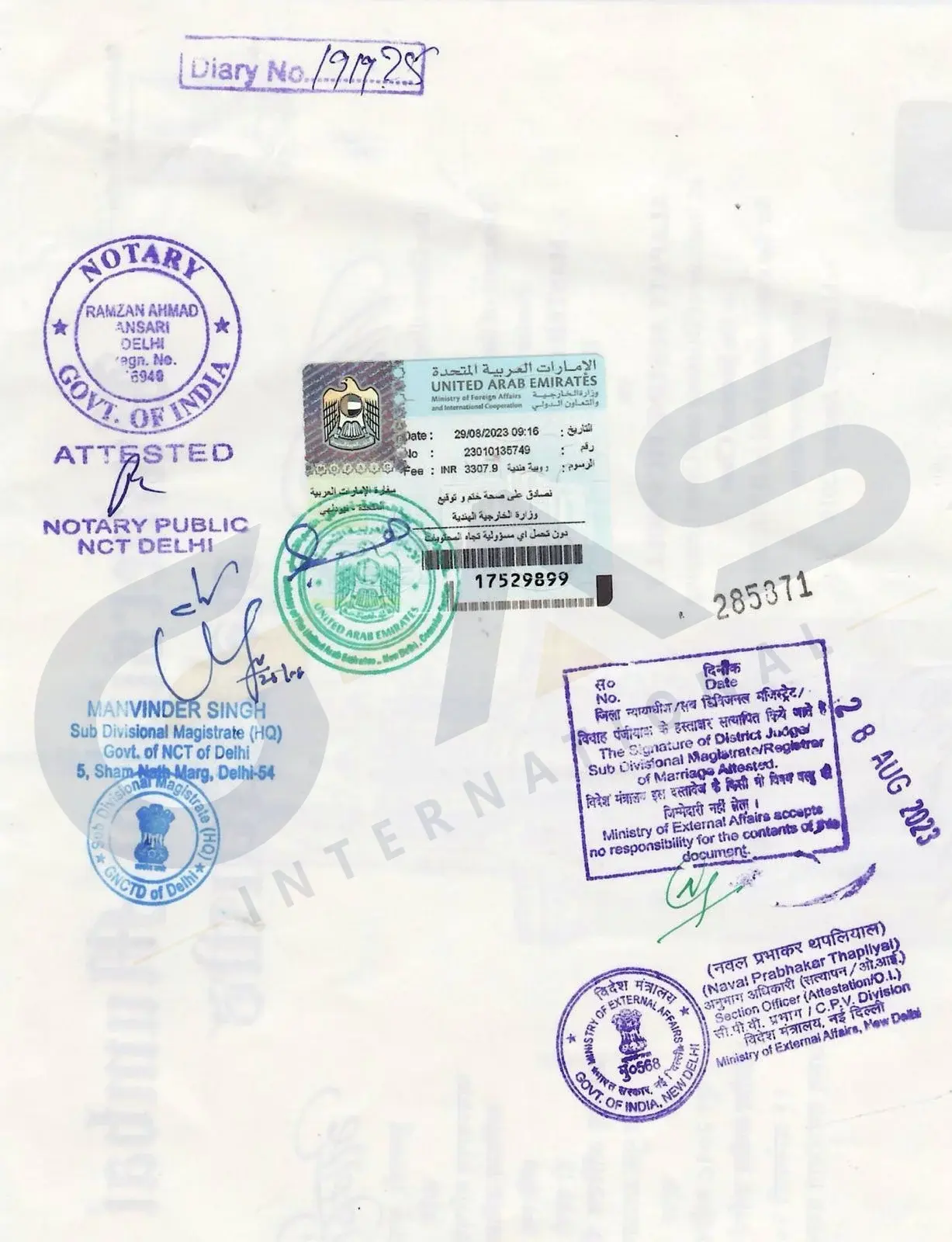
NOC Affidavit Attestation

GOOD APOSTILLE SERVICES provides professional NOC Affidavit Attestation assistance for smooth, reliable, and properly coordinated document attestation for international use.

call us

+91 9824692246

call us

+91 9104499727

NOC Affidavit Attestation for overseas document legalization
NOC Affidavit Attestation
01

What Should Be Confirmed Before NOC Affidavit Attestation?

Before NOC Affidavit Attestation begins, confirm who is giving the no-objection declaration, what permission is being granted, who will receive the document, and where it will be submitted. A clearly prepared affidavit helps the verification chain follow the intended overseas purpose without creating ambiguity between consent, authorization and supporting evidence.

  • Name of the person giving consent
  • Person or matter covered by the consent
  • Exact purpose of the no-objection declaration
  • Country and receiving authority, when known
  • Date, signature and identity consistency
  • Notarial details required for the document
For broader background, review document authentication options for overseas use before selecting the route.
02

NOC Affidavit Attestation Services: Pre-Submission Review Points

A useful pre-submission review checks whether the affidavit is complete, signed in the required manner, supported by matching identity records and suitable for the authority that will receive it. Authentication concerns the document and official verification chain; acceptance of the declaration itself remains subject to the receiving authority’s own rules.

  • Full name matching identity records
  • Signature placed in the required manner
  • Notarial seal and registration details
  • Supporting records matching the stated purpose
  • Correct route for the destination country
  • No unexplained name or date differences
Good Apostille Services can check the document set before submission so avoidable inconsistencies are identified early.
03

MEA Attestation for NOC Affidavit: How the Destination Changes the Route

The route depends on where the affidavit will be used. For a Hague Apostille Convention destination that accepts apostilles, the document may follow the apostille path. Where apostille is not accepted, normal MEA attestation may be required, with any additional embassy step determined by the destination and receiving authority.

  • Identify the destination and receiving authority
  • Confirm apostille or normal-attestation route
  • Complete applicable prior authentication
  • Submit through the applicable authorised channel
  • Complete MEA authentication or apostille step
  • Follow any destination-specific final requirement
For Hague-country use, see the dedicated apostille route for no-objection affidavits.
04

Which Supporting Records Can Be Relevant to NOC Affidavit Attestation?

The supporting set should make the declaration easy to identify and connect to its stated purpose. Requirements differ by case, so the receiving authority may ask for identity proof, relationship evidence, property papers, consent records, translations or other documents that explain why the affidavit is being submitted.

  • Final signed affidavit in the accepted form
  • Passport or other identity evidence
  • Relationship proof where the NOC depends on it
  • Property or transaction records when applicable
  • Certified translation if specifically required
  • Any authority-specific form or supporting letter
If the document delegates authority rather than merely recording consent, review authentication requirements for powers of attorney.

Three Practical Areas to Review Before Submission

NC

NOC Affidavit Certificate Attestation: Drafting and Identity Consistency

The affidavit should state the permission in precise terms and use identity details that agree with the supporting records. Before processing, check whether the names, relationship, dates, document references and signatory details are internally consistent and whether the declaration addresses the purpose requested by the overseas authority.

  • Declarant name exactly as supported by ID
  • Beneficiary or subject clearly identified
  • Relationship or legal capacity explained
  • Permission described without vague wording
  • Purpose and destination stated when required
  • Execution details completed before submission
PD

Personal Records Commonly Reviewed With the Affidavit

An NOC affidavit can depend on personal records that establish identity, family relationship, residence or another fact mentioned in the declaration. Good Apostille Services can help organize the relevant personal-document set while keeping the affidavit’s purpose and the receiving authority’s requirements aligned.

  • Passport or accepted identity record
  • Birth record for parent-child matters
  • Marriage record for spousal matters
  • Address evidence when specifically requested
  • Existing consent or authority document
  • Additional personal proof requested by the authority
Read More
DR

NOC Affidavit Document Attestation: Acceptance and Destination Checks

Acceptance can depend on the destination, the institution receiving the affidavit and the purpose for which it is being filed. Check whether the authority expects an apostille, normal attestation, embassy legalization, translation, a prescribed affidavit format or documents issued within a particular period before sending the original.

  • Confirm what the receiving authority accepts
  • Check whether embassy legalization is requested
  • Confirm language and translation requirements
  • Use any prescribed affidavit format
  • Check whether local legalization follows abroad
  • Confirm any document-age or validity condition

NOC Affidavit Attestation FAQs

Practical answers for preparing, routing and submitting a no-objection affidavit.

Purpose of the No-Objection Affidavit

Understand what the affidavit is expected to do before choosing a legalization route.

It authenticates the document through the required official chain for overseas use; the receiving authority still decides whether the affidavit satisfies its substantive requirements.

An authority may request written no-objection or consent for a family, property, residence, sponsorship, institutional or other documented purpose.

Start with the destination and the receiving authority. Hague Convention use may call for apostille, while other cases can require normal attestation and additional legalization.

Draft and Supporting-Record Review

Reduce avoidable mismatches before the document enters the verification chain.

Identify the person giving the declaration, the person or matter covered, the scope of consent and the intended use. Add destination details when the receiving authority requires them.

Unexplained differences can delay review. Check spellings, initials, dates and document numbers, and prepare supporting clarification if the authority requires it.

Confirm the execution requirement first. Signing, notarization and prior authentication can depend on the document format, issuing context and destination.

Selecting the Legalization Path

Match the document to the destination before submission.

Depending on the case, the route can include document execution, applicable prior authentication, MEA apostille or normal attestation, and any additional destination-specific legalization.

For documents outside the eligible digital route, the applicable designated authority may need to authenticate the document before MEA processing.

It can become relevant when the destination does not accept apostille or specifically requires an embassy or consular legalization step after MEA processing.

Planning Time and Avoiding Rework

Processing depends on the route, document readiness and external authorities.

Delays can result from incomplete execution, mismatched names, missing prior authentication, translation needs, authority-specific forms or an incorrect destination route.

No. The total can vary because the required route, outsourced handling, courier, translation, embassy or other destination-specific services may differ.

It is safer to confirm the document route and current authority requirements first, then plan around the processing stages that actually apply to your case.

Submission and Document Handling

Prepare the final set carefully before handing over originals.

The team can review the intended destination, document type and supporting set, then guide you on the applicable submission route and handling requirements.

Send an original only after confirming what the selected route and receiving authority require. Keep a clear scan or photocopy for your own records.

Yes. A judicial document can follow different requirements from an affidavit; see the guidance for overseas authentication of court-issued orders when a court order is part of the case.

Need Apostille or Attestation Support for Your Documents?

Your Trust, Our Responsibility — That’s a G-AS Commitment.

call us

+91 7016754663

call us

+91 9104499727

whatsapp

+91 9824692246

Email us

info@goodapostille.com

Our Apostille Process

01

Document Review

We check the document, purpose and destination country.

02

Route Confirmation

The correct verification route is confirmed before submission.

03

Authority Verification

Required verification is completed through the relevant authority.

04

MEA Apostille

The eligible document proceeds for final apostille processing.

05

Secure Delivery

Completed documents are checked, packed and safely dispatched.