
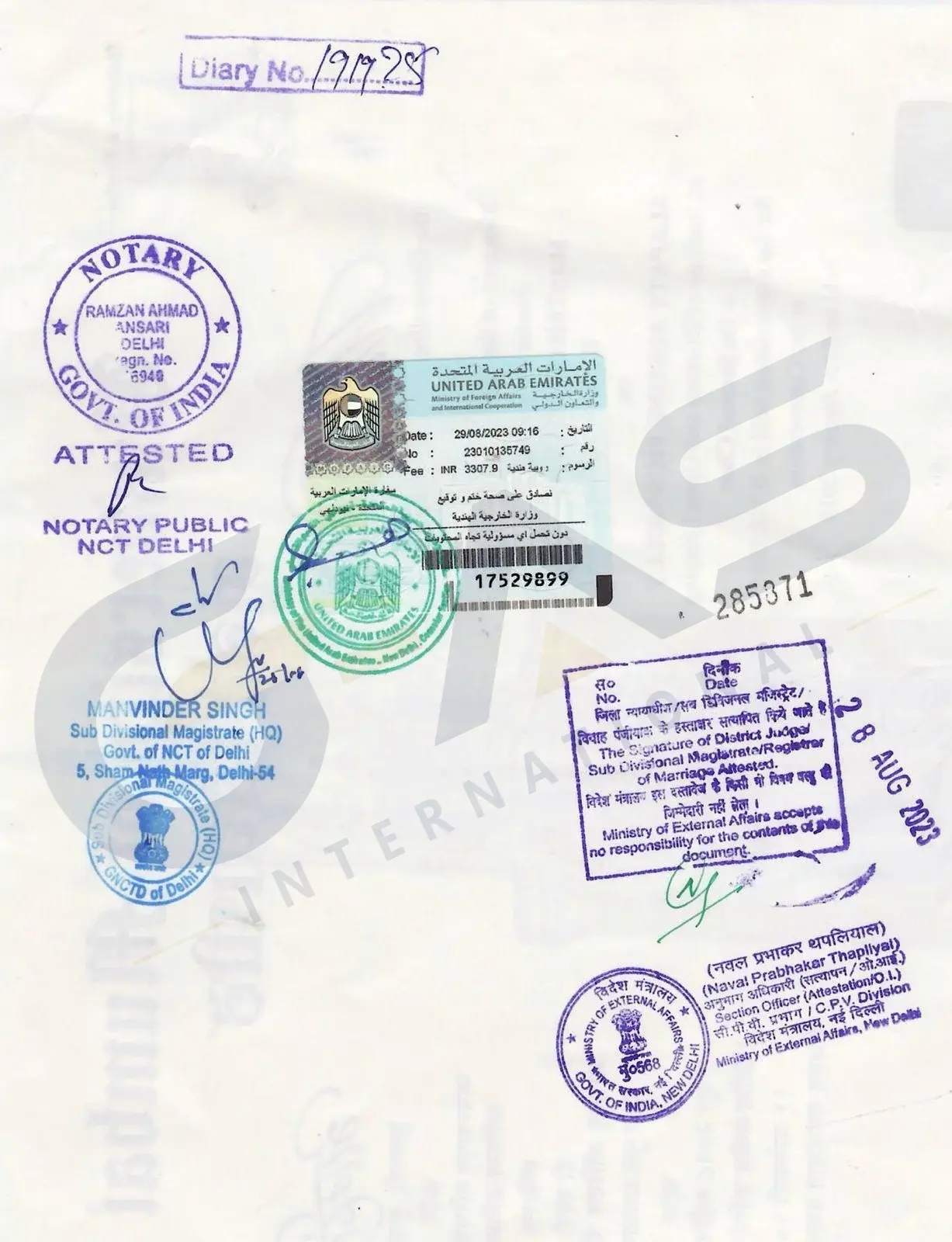
Will Attestation

GOOD APOSTILLE SERVICES provides professional Will Attestation assistance for authenticating will documents intended for overseas legal, property, inheritance, and succession-related purposes.

call us

+91 7016754663

call us

+91 9824692246

Will Attestation Services for Overseas Legal Use
Will Attestation
01

When Is Will Attestation Needed for Overseas Use?

Will Attestation may be requested when a Will executed in India must be presented to a foreign court, registry, bank, property authority, or estate administrator. The exact route depends on where the Will was executed, the destination country, and the receiving authority’s instructions. For Hague Convention destinations, an eligible notarized or officially certified Will may follow the Will Apostille process instead of embassy legalization.

  • Estate administration or inheritance proceedings outside India
  • Property transfer, mutation, or registration involving overseas authorities
  • Bank, investment, or asset-release requirements for an estate
  • Submission before a foreign court, probate office, or registry
  • Cross-border executor, beneficiary, or legal representative documentation
  • Receiving-authority requests for authenticated testamentary documents
Confirm the destination country and the receiving authority’s exact requirement before starting authentication, because a Will may need notarization, apostille, normal attestation, embassy legalization, or another supporting step.
02

How Does Attestation for Will Differ From Witness Attestation?

Attestation for Will in an international-document context is different from the witnesses who attest execution of the Will. Under Indian succession law, an unprivileged Will is generally executed by the testator and attested by at least two witnesses. Later document authentication verifies the relevant signature, seal, or official capacity in the legalization chain; it does not decide whether the Will’s contents are legally effective.

  • Testator signs or acknowledges the Will as legally required
  • Required witnesses attest execution of the testamentary document
  • Notarial certification may be needed for international authentication
  • Authentication checks official signatures, seals, and authority
  • It does not confirm beneficiaries or ownership rights
  • Probate or court procedure may still apply separately
Authentication of a Will should not be treated as a substitute for legal advice, probate, succession proceedings, or any separate requirement imposed by the court or authority handling the estate.
03

What Should Be Checked Before Will Document Attestation?

Before authentication, check the complete Will rather than only the signature page. Names, dates, page numbering, witness details, signatures, notarial endorsements, seals, and any alterations should be clear and consistent. If the receiving authority asks for related records, those may need a separate document attestation service rather than being treated as part of the Will.

  • Complete Will with all pages in the correct order
  • Clear testator signature and witness execution details
  • Notary seal and certificate where notarization is required
  • Matching names across identity and supporting documents
  • Certified translation when the receiving authority requires one
  • Destination-specific instructions for originals or certified copies
Do not laminate, alter, detach, or add pages after notarization or certification unless the competent authority specifically instructs you to do so.
04

Which Route Applies for MEA Attestation for Will?

The MEA authentication route depends on the destination and the form in which the Will is presented. For a Hague Convention country, an eligible public or notarized document may require an apostille. For a destination where apostille is not accepted, normal attestation and further embassy or consular legalization may be required. The receiving authority’s written requirement should determine the route.

  • Identify the country where the Will will be used
  • Confirm whether that country accepts the Hague Apostille Convention
  • Check whether notarization or prior authentication is required
  • Use apostille only when the destination and document qualify
  • Use normal attestation for applicable non-Hague destinations
  • Confirm any embassy, consular, translation, or court requirement
GOOD APOSTILLE SERVICES can review the document type, destination, and intended use before submission so the Will follows the appropriate authentication sequence.

Will Attestation Services and Related Personal Records

WA

Will Certificate Attestation and Document Readiness

A Will should be reviewed as a complete legal document before authentication. The required form may be the original Will, a notarized version, or an eligible certified copy, depending on the receiving authority. The case should therefore begin with document-format and destination checks rather than assuming the same sequence applies to every Will.

  • Original or eligible certified copy of the Will
  • Notarial certificate or endorsement, where required
  • Testator identification details matching the Will
  • Witness details or supporting declaration, when requested
  • Certified translation for authorities requiring another language
  • Written checklist from the receiving authority
PD

Personal Documents Supporting Will Attestation

Personal records may be required to establish identity, relationship, death, address, or another fact connected with an estate matter. They are not automatically part of the authentication process, and each document should be processed only when the court, registry, bank, lawyer, or foreign authority requests it. Where relevant, a separate NOC affidavit attestation may also be needed.

  • Passport or other accepted identity document
  • Death certificate for post-death estate procedures
  • Marriage or birth records proving relationship, if required
  • Address proof requested by the receiving authority
  • Name-change record where names differ across documents
  • Affidavit or NOC supporting a specific estate requirement
Read More
CR

Court and Estate Records for an Overseas Will

A Will may be submitted together with probate, letters of administration, or another judicial record during an inheritance or property matter. Those records are separate from the Will and may require their own authentication. If a foreign authority asks for an authenticated judicial document, use the appropriate court order attestation route instead of treating the court record as part of the Will.

  • Probate order, where applicable to the estate
  • Letters of administration issued by a competent court
  • Certified court order connected with inheritance
  • Executor or administrator appointment record
  • Judicial record concerning estate or property rights
  • Supporting legal document specifically requested overseas

Will Attestation Questions Answered

Practical answers on Will execution, document authentication, apostille, supporting records, costs, and secure submission.

Will Basics

Key distinctions between testamentary witnessing and international authentication.

No. Witness attestation relates to execution of the Will itself, while international document authentication concerns the signature, seal, or official certification used in the legalization chain. A document can be properly executed as a Will yet still require separate notarization, apostille, MEA attestation, or consular legalization before an overseas authority will accept it.

No. Will Attestation does not prove that a beneficiary owns an asset, confirm the truth of every statement in the Will, or replace probate and other succession procedures. It authenticates the relevant document signature, seal, or official certification for the intended cross-border use, subject to the requirements of the receiving authority.

An apostille may be appropriate when the document qualifies as a public document or carries an eligible official or notarial authentication, the destination is covered by the Hague Apostille Convention, and the receiving authority accepts that route. Otherwise, normal attestation and embassy or consular legalization may be required.

Document Readiness

Checks to complete before a Will or supporting record is submitted.

Not always, but a privately signed Will may need notarization or another official certification before it can enter an international authentication chain. The correct step depends on the document’s form, where it was executed, the destination country, and the instructions of the court, registry, bank, or other receiving authority.

A plain photocopy should not be assumed to qualify. MEA procedures distinguish original documents or eligible true copies from ordinary photocopies, and the acceptable format can vary by route. Confirm whether the authority needs the original Will, a notarized copy, a certified true copy, or another officially authenticated version before submission.

Check the testator’s name, signatures, witness details, page sequence, dates, notarial endorsement, seals, corrections, and any attachments. Also compare names against passports or other supporting records. Any mismatch should be resolved before authentication, especially when the document will be used in property, banking, probate, or estate administration.

Authentication Route

How destination country and document form determine the legalization path.

The destination country and the receiving authority’s requirement are decisive. Start with what the foreign court, registry, bank, lawyer, or public authority has asked for, then match that requirement to the available Indian process. GOOD APOSTILLE SERVICES can help identify whether notarization, apostille, MEA attestation, embassy legalization, or supporting-document authentication is relevant.

No. e-Sanad depends on verification through participating document issuing authorities and digital repositories. A Will that is not available through an eligible digital source may need the applicable physical authentication route. The document format and prior certification should therefore be checked before assuming that online processing is available.

International authentication normally follows the country where the document or official certification originated. A Will executed abroad may first need the legalization or apostille process of that country before it is presented elsewhere. The receiving authority should confirm whether any additional Indian consular or local step is required for the intended use.

Costs & Timing

What can affect quotation, government charges, and processing time.

The total can depend on the document format, required notarization or prior authentication, destination country, embassy or consular step, number of documents, translations, collection, and return delivery. A quotation should separate government charges from professional service, verification, courier, and third-party costs wherever those charges apply.

No. An urgent service cannot remove a mandatory notarization, prior authentication, apostille, MEA step, embassy legalization, or receiving-authority requirement. Expedited handling may shorten service or courier time where available, but the document still has to follow the authentication sequence required for its destination and purpose.

There is no single timeline for every case. Processing can vary with the document’s condition, notarization or pre-authentication, destination, embassy requirements, public holidays, authority response time, and courier arrangements. A realistic estimate should be given only after the Will and the receiving authority’s instructions have been reviewed.

Submission & Return

Practical handling guidance for original or certified legal documents.

Keep the document flat, complete, and protected. Do not detach pages, add notes, laminate pages, replace witness pages, or make corrections after notarization or certification unless an authorized professional or competent authority instructs you to do so. Retain a clear scan of the complete document before dispatch.

Yes, when the service provider has confirmed the checklist and each document is clearly identified. However, supporting records can follow different authentication routes, so placing them in one courier package does not mean they should receive the same stamps or certificates. Keep separate copies and an itemized document list.

Check that the correct document was processed, names and identifying details match, the required stamp, sticker, seal, or certification is present, and all original pages have been returned. Also verify the destination authority’s next step before sending the authenticated Will for probate, property, banking, or another estate procedure.

Need Apostille or Attestation Support for Your Documents?

Your Trust, Our Responsibility — That’s a G-AS Commitment.

call us

+91 7016754663

call us

+91 9104499727

whatsapp

+91 9824692246

Email us

info@goodapostille.com