
Court Order Apostille

GOOD APOSTILLE SERVICES provides Court Order Apostille support for Indian court orders intended for official use in Hague Convention countries, with guidance on document verification and the MEA apostille process.

call us

+91 9824692246

call us

+91 9104499727

Court Order Apostille services for Indian court documents used abroad
Court Order Apostille
01

Where Is Court Order Apostille Used for Overseas Legal Matters?

A judicial order issued in India may be requested abroad for divorce registration, custody, guardianship, adoption, inheritance, immigration or other legal filings. Court Order Apostille is relevant when the receiving country applies the Hague Apostille Convention and the authority asks for the Indian judicial document to be authenticated.

  • Overseas divorce or marital-status registration
  • Child custody and guardianship proceedings
  • Adoption or parental-right documentation
  • Probate, succession and estate matters
  • Immigration files requiring a judicial record
  • Foreign recognition of an Indian court decision
The destination matters. Review the receiving authority’s instructions and use broader document authentication guidance when other records must be processed with the court order.
02

What Does an Apostille Actually Authenticate on a Court Order?

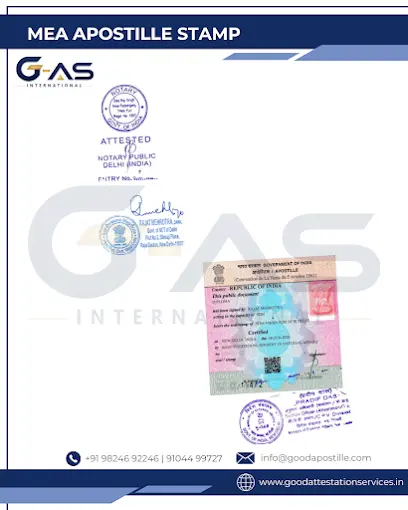
The apostille confirms the origin of the public document by authenticating the signature, the capacity of the signer and, where applicable, the seal or stamp. It does not certify that the court’s findings are correct, nor does it decide whether a foreign authority must recognise or enforce the order.

  • Signature appearing on the public document
  • Official capacity of the person signing
  • Seal or stamp shown on the record
  • Country in which the apostille was issued
  • Apostille certificate date and reference details
  • Competent authority responsible for the apostille
Court Order Apostille authenticates the document’s origin; recognition, admissibility and legal effect remain questions for the authority receiving the order abroad.
03

What Can Delay Court Order Document Apostille?

Processing time can depend on more than the MEA stage. Delays may arise if the copy is incomplete, certification details are unclear, State or Union Territory pre-authentication is required, names differ across records, the recipient requests translation, or additional pages must be obtained from the issuing court.

  • Incomplete or uncertified court copies
  • Missing pages, schedules or annexures
  • Mismatch in names or case details
  • Pre-authentication required before MEA submission
  • Translation requested by the foreign recipient
  • Courier, collection or return transit time
MEA’s published citizen charter states that apostille processing is usually completed within seven working days after receipt in MEA; document verification or pre-authentication before that stage can add separate time.
04

How Should You Prepare for MEA Apostille for Court Order?

Before submission, check whether the receiving authority wants the final judgment, a certified copy, annexures, a decree, or a translated version. Good Apostille Services can help review the document type, destination and intended use so the appropriate authentication route is selected before the original record is sent.

  • Correct court and case identification
  • Names matching the intended foreign filing
  • Order date and finality details
  • Visible certification, signature and seal
  • Complete pages, schedules and annexures
  • Destination-specific language or translation requirements
For a country where apostille is not the applicable route, review the attestation route for court documents instead of assuming the same procedure applies.

Court Order Apostille: Court Copy, Destination and Supporting Records

CF

Court Copy Format and Completeness

The copy submitted for Apostille for Court Order should match what the foreign recipient expects. Check whether it asks for a certified copy, final decree, judgment, complete order, schedules or annexures. A partial scan or informal printout may not provide the certification details needed for the authentication route.

  • Court-issued certified copy
  • Complete judgment or final order
  • Case or petition number
  • Official certification and seal
  • All referenced schedules or annexures
  • Readable signatures and endorsements
PD

Personal Records That May Support a Foreign Court Filing

A foreign authority may ask for personal records alongside the judicial order, depending on the case. These supporting documents follow their own authentication requirements. For example, a family or consent matter may involve a supporting NOC affidavit, while civil-status records may need separate processing.

  • Birth or marriage certificate
  • Death certificate where relevant
  • Police Clearance Certificate
  • Personal affidavit or declaration
  • Personal Power of Attorney
  • Identity or civil-status supporting record
Read More
DU

Destination and Intended-Use Checks

Before starting Court Order Apostille Services, confirm the destination country and the exact purpose for which the order will be used. Probate or succession files can also involve testamentary records; where relevant, check apostille requirements for a will as a separate document rather than assuming the court order covers it.

  • Destination country and Convention status
  • Name of the receiving authority
  • Reason the order is being submitted
  • Need for a final or effective order
  • Translation or language requirement
  • Supporting-document requirements

Court Order Apostille Questions for Overseas Use

Practical answers on suitability, court-copy preparation, MEA processing, charges and delivery.

When Court Order Certificate Apostille May Apply

Check destination and intended use before processing.

It may be suitable when the order falls within the applicable public-document route and the receiving country uses the Hague Apostille Convention. Always confirm the foreign authority’s document requirements first.

No. The apostille authenticates the origin of the public document; it does not certify the correctness of the judgment or compel a foreign authority to recognise its legal effect.

No. Apostille is intended for Convention destinations. For non-Apostille destinations, the receiving authority may require a different legalisation or attestation process.

Preparing the Judicial Record

Confirm the copy, pages and certification details.

For Court Order Apostille, use the form requested by the recipient, such as a court-certified copy, final order, decree or complete judgment. The certification and issuing details should be clear and readable.

Include the material the receiving authority requires. If schedules or annexures form part of the order, confirm whether the complete set must be submitted together.

Check the court name, case number, party names, order date, certification, seals, signatures and page completeness. Correct discrepancies before submission where possible.

Authentication and Submission Route

Understand pre-authentication and MEA submission.

The Ministry of External Affairs of the Government of India is the designated competent authority for apostilles issued in India.

Yes. MEA states that documents outside the relevant e-Sanad route may require prior authentication by the appropriate State or Union Territory authority before submission.

MEA’s citizen charter states that apostille service is usually completed within seven working days after the document is received in MEA. Earlier verification and transit time are separate.

Official and Service Charges

Separate government, service and optional costs.

MEA currently lists a government fee of ₹50 per apostilled document. Applicable outsourced service and scanning charges are separate.

The total can include authorised service-provider charges, scanning, State-level verification, translation, document retrieval or courier services, depending on the case.

No. Translation depends on the language rules of the receiving authority and should be arranged only in the format it accepts.

Safe Document Return

Plan handling, collection and tracked return.

Submission can be coordinated through the authorised route applicable to the document. Good Apostille Services can assist with document review, routing and status coordination without changing the issuing authority’s requirements.

Keep pages flat, complete and protected from moisture or bending. Avoid alterations that cover or damage court seals, signatures, QR codes, stamps or certification endorsements.

Yes, when a tracked return option is arranged. Confirm the delivery address and contact details before dispatch so the completed judicial record can be returned securely.

Need Apostille or Attestation Support for Your Documents?

Your Trust, Our Responsibility — That’s a G-AS Commitment.

call us

+91 7016754663

call us

+91 9104499727

whatsapp

+91 9824692246

Email us

info@goodapostille.com

Our Apostille Process

01

Document Review

We check the document, purpose and destination country.

02

Route Confirmation

The correct verification route is confirmed before submission.

03

Authority Verification

Required verification is completed through the relevant authority.

04

MEA Apostille

The eligible document proceeds for final apostille processing.

05

Secure Delivery

Completed documents are checked, packed and safely dispatched.