
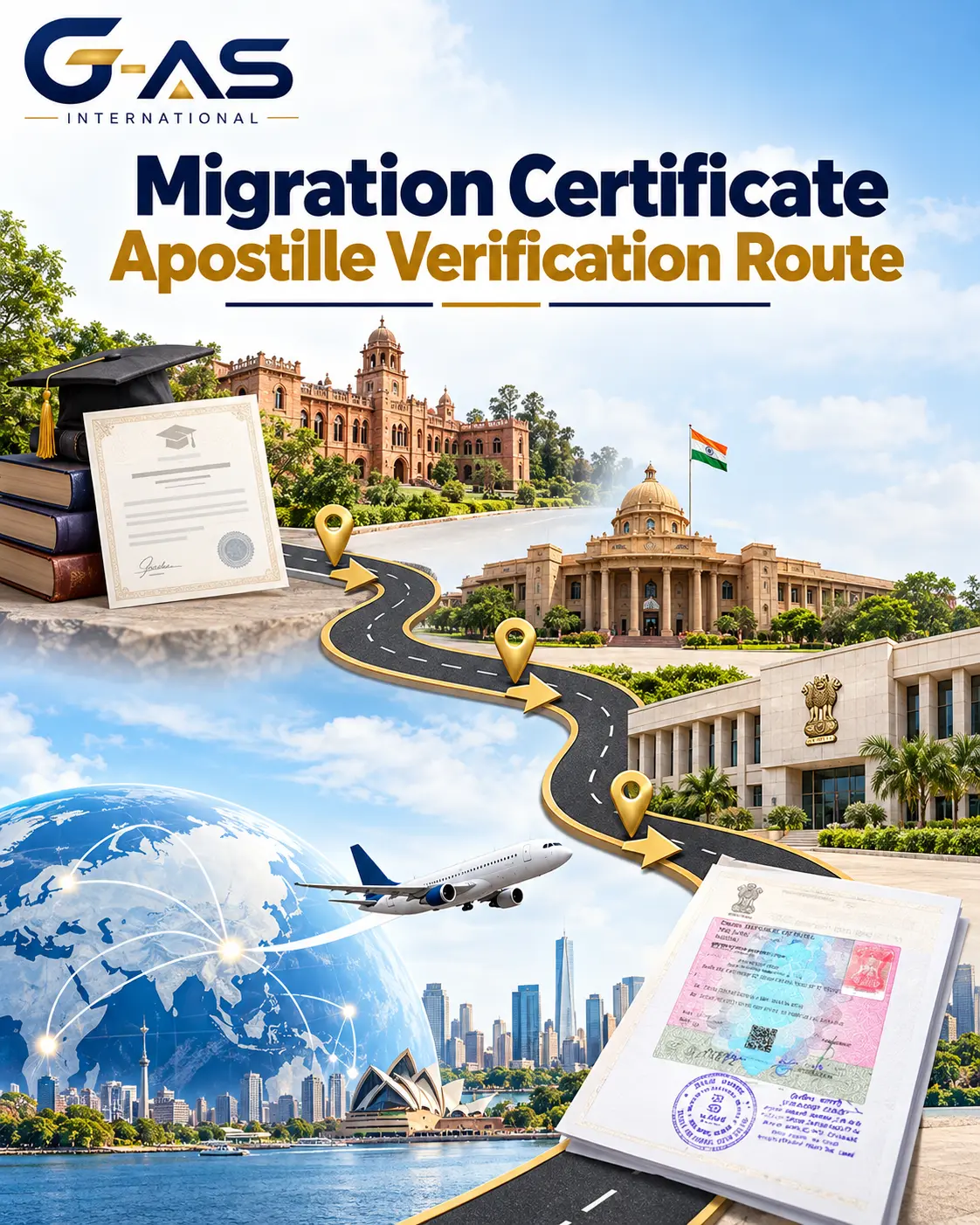
The Migration Certificate Apostille Verification Route explains how an Indian migration certificate is checked before receiving an MEA apostille for overseas use. For documents outside the e-Sanad route, educational records generally require authentication through the designated authority of the State or Union Territory where the document was issued before proceeding to MEA.
This article explains how to identify the correct issuing and verification authority, understand state or HRD authentication, and distinguish references to SDM and other pre-authentication routes. It will also cover e-Sanad applicability, Regional Authentication Centres, authority checks, and the sequence leading to the MEA apostille stage.
The verification route matters when a migration certificate issued in India must be authenticated for submission abroad. The correct path depends primarily on the issuing authority, available verification method, and requirements of the receiving institution.
A foreign university may request an authenticated migration certificate when evaluating previous academic movement or institutional records. Confirm exactly which academic documents the receiving institution expects before beginning authentication.
The issuing board or university and the applicable State or Union Territory authority may need to be identified before the certificate can proceed through the appropriate verification channel.
Apostille is relevant only where the destination and receiving authority accept the Hague Apostille framework. The wider step-by-step procedure for a migration certificate can be reviewed separately when the complete sequence is required.
The Migration Certificate Apostille Verification Route starts with a document that can be connected clearly to its issuing educational authority. Requirements can vary according to the issuer and verification channel.
Check that the certificate clearly identifies the board, university, or educational institution responsible for issuing the record and contains its normal authentication details.
The applicant's name, certificate number, institution details, dates, signature, and seal should be clear and consistent with the educational records used for verification.
Some authorities may request supporting academic or identity records during verification. Check the applicable requirements instead of assuming the same supporting documents apply in every State.
For a separate preparation guide, review the supporting-document checklist for migration certificates before sending the record for authentication.
The Migration Certificate Apostille Verification Route should follow the verification method applicable to the specific certificate rather than a single assumed route for every educational document.
Begin by confirming which university, board, or other educational authority issued the migration certificate. The place and authority of issue help determine which verification channel is relevant.
If the issuing authority and record are supported through the official digital verification framework, verification may proceed electronically. Documents outside that system generally require the applicable State or Union Territory authentication route.
For documents following the physical route, educational authentication should be completed through the authority designated for the relevant State or Union Territory before the record proceeds for MEA apostille processing.
After the required preceding verification is complete, the eligible document can proceed to the Ministry of External Affairs apostille stage. An issued Indian apostille can subsequently be checked through the official e-Register.
Terms such as HRD, Education Department, State authentication, and SDM are often used when discussing pre-authentication, but they should not automatically be treated as interchangeable routes.
For educational documents outside an applicable digital route, official MEA guidance points to authentication by the designated authority of the State or Union Territory from which the document was issued. Confirm the competent authority for the particular certificate before submission.
An SDM-based route should not be assumed merely because it is mentioned in general apostille guidance. The appropriate path depends on the document, issuing jurisdiction, accepted authentication channel, and receiving authority's requirements.
Most avoidable problems arise before the MEA stage, particularly when the issuer, document details, or responsible verification authority have not been confirmed correctly.
Submitting the document through an authority that is not appropriate for its issuing State, institution, or document category can interrupt the verification chain.
Differences in names, certificate numbers, signatures, seals, or institutional records may require clarification or correction before the document can be authenticated.
A migration certificate should be assessed according to its own issuer and verification method. Routes used for degrees, marksheets, bonafide certificates, or other records may differ.
For additional examples of problems that can interrupt processing, review these common migration-certificate submission issues before proceeding.
Use this short check before beginning the Migration Certificate Apostille Verification Route to avoid choosing a verification method based only on general assumptions.
The answer depends on the issuing authority and available route. Eligible records may be verified through an integrated digital issuing authority, while other educational documents generally follow the designated State or Union Territory authentication channel.
Not necessarily. The applicable Migration Certificate Apostille Verification Route depends on the issuer, State or Union Territory, digital-verification availability, document format, and the authentication method accepted for that record.
No route should be selected automatically. First determine which authority is competent to authenticate the certificate and whether the receiving institution has any specific requirement concerning the preceding verification method.
It can. Issuer verification, State procedures, document corrections, digital availability, working schedules, and submission handling can all influence the overall sequence before and during apostille processing.
This verification article does not add pricing information. Use the separate migration-certificate fees guide when you specifically need that topic.
No. The issuing institution and document type can change the authentication route. For comparison, see how the apostille procedure for a bonafide certificate is assessed separately.
Your Trust, Our Responsibility — That’s a G-AS Commitment.
Get Document Guidance