
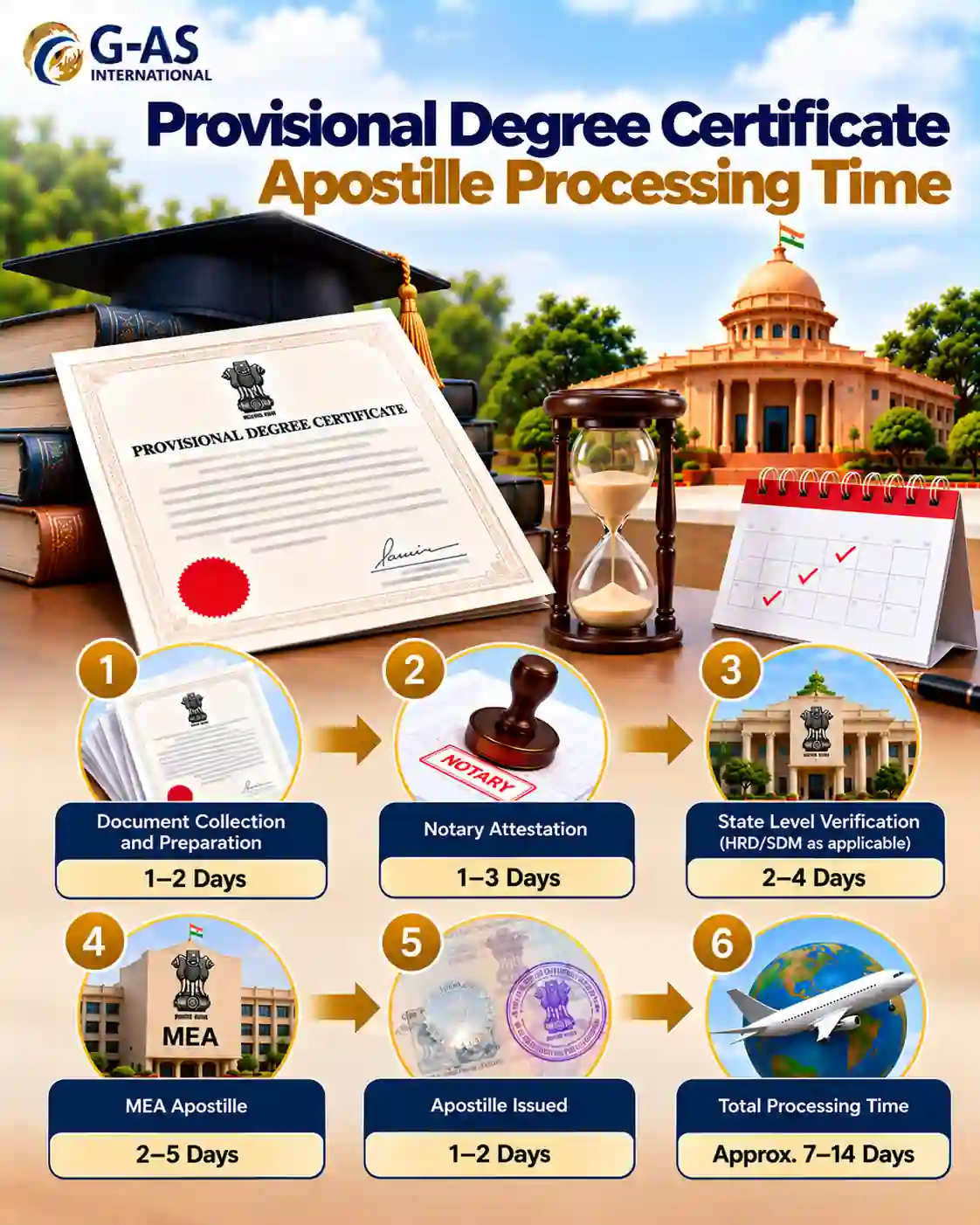
The Provisional Degree Certificate Apostille Processing Time in India is not always fixed because the complete timeline may include university or state-level pre-authentication before the document reaches the Ministry of External Affairs (MEA). The MEA’s Citizen’s Charter states that apostille processing is usually completed within 7 working days after the document is received by MEA.
The total time can therefore vary depending on the verification route, issuing authority, document readiness, and whether prior authentication is required. This post explains the Provisional Degree Certificate Apostille Timeline, the stages that can affect processing, common causes of delay, and how to estimate a practical timeframe before an overseas submission deadline.
A provisional degree certificate is commonly used while the final degree is still pending. Knowing the expected processing timeline helps applicants plan overseas submissions without assuming that every certificate follows the same verification route.
Students applying before convocation may need an apostilled provisional certificate when the receiving university accepts temporary evidence of completed academic qualifications.
Employers or credential-evaluation authorities may request authenticated academic evidence, making the available processing window important when applications have fixed submission deadlines.
Some immigration, licensing, or professional applications accept provisional qualifications, but applicants should first confirm that the receiving authority accepts the certificate in provisional form.
The Time Required for Provisional Degree Certificate Apostille can depend on whether the document is complete, verifiable, and ready for the applicable pre-authentication route.
The certificate should be legible and contain consistent university details, signatures, seals, issue information, and student particulars. Review the document preparation checklist before starting.
Supporting documents may be requested depending on the issuing university, authentication authority, submission channel, and verification method applicable to the certificate.
Before processing, confirm that the foreign university, employer, licensing body, or other receiving authority accepts a provisional certificate instead of requiring the final degree.
Educational-document authentication can vary according to the issuing state, university, available verification system, document condition, and the requirements of the receiving authority abroad.
The complete timeline should be understood as separate stages rather than a single fixed number of days. The step-by-step apostille procedure provides additional process context.
The certificate is first checked for readable university information, correct holder details, signatures, seals, issue information, and any obvious discrepancy that could interrupt later authentication.
Documents not covered through an applicable electronic verification route generally require authentication by the relevant State or Union Territory authority before MEA apostille. The correct authority and sequence can vary, so review the verification-route guidance for this certificate type.
After the required pre-authentication is completed, the eligible document proceeds through the applicable authorized submission channel for apostille by the Ministry of External Affairs.
Once apostilled, the document should be checked for completion before dispatch or collection. Applicants waiting for a permanent degree can separately review the final-degree authentication route.
There is no single universal completion period because the Provisional Degree Certificate Apostille Duration includes any required verification before the document reaches MEA.
MEA's published service timeline states that apostille is usually completed within seven working days after the document is received by MEA. This period should not automatically be treated as the complete end-to-end timeline because earlier authentication may still be required.
University confirmation, State or Union Territory authentication, corrections, or other pre-authentication requirements may extend the overall Provisional Degree Certificate Apostille Processing Time. The duration of these preliminary stages varies according to the document and issuing authority.
Unexpected verification or document problems can extend Provisional Degree Certificate Apostille Time even when the final apostille stage itself proceeds normally.
Differences in the student's name, course, university details, certificate number, or supporting identification can require clarification or correction before processing continues.
Where confirmation from the issuing institution is necessary, the overall timeline may depend on how quickly the university verifies the certificate or responds to the competent authority.
Submitting a certificate without the applicable prior authentication can interrupt processing. Checking the required route before submission helps avoid unnecessary repeat handling.
Unreadable information, damaged sections, unresolved discrepancies, or unsuitable authentication can create additional review. See the common rejection causes before submitting important originals.
A few checks before submission can make the Provisional Degree Certificate Apostille Timeline easier to plan and reduce preventable interruptions.
Applicants planning the complete submission can also review relevant cost planning factors separately before arranging document processing.
These answers clarify common timing questions about apostilling an Indian provisional degree certificate for use abroad.
No. MEA publishes a timeline for its apostille stage, but the complete duration can be longer when State, university, or other pre-authentication is required beforehand.
The relevant MEA service timeline applies after the properly authenticated document has been received for apostille. Time spent completing earlier verification should be calculated separately.
Yes. If verification from the issuing university or another competent educational authority is necessary, the total completion period can depend on its response and processing procedure.
No. The applicable route can vary according to the issuing authority, State or Union Territory, electronic verification availability, certificate type, and current authentication procedure.
Check the recipient's requirement first. A foreign university, employer, licensing authority, or immigration body may specifically request the final degree rather than temporary proof of qualification.
Plan separately for document preparation, any required university or State-level verification, MEA processing, and return delivery. Starting before the overseas submission deadline provides room for verification-related delays.
Your Trust, Our Responsibility — That’s a G-AS Commitment.
Get Document Guidance