
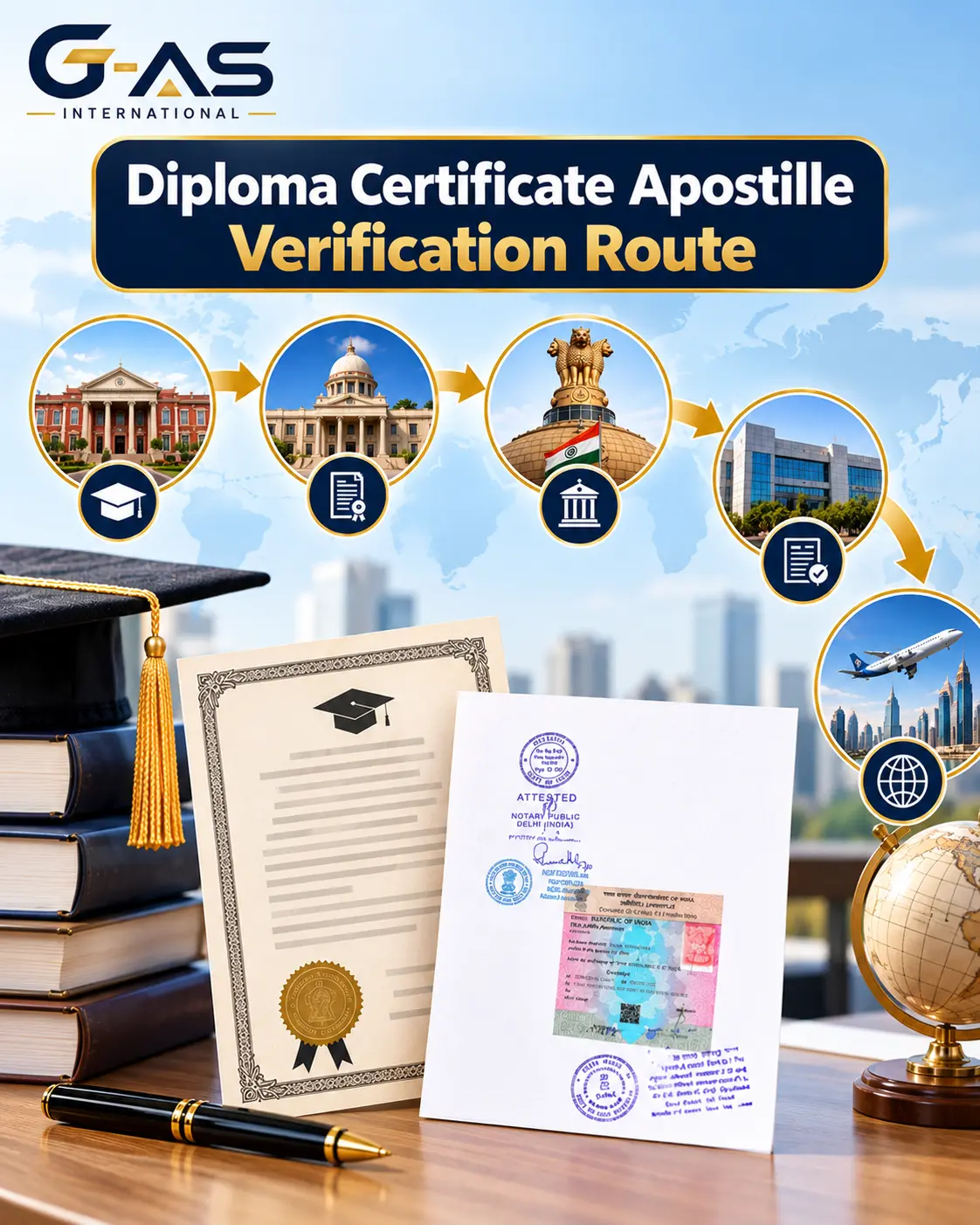
The Diploma Certificate Apostille Verification Route explains how an Indian diploma is authenticated before receiving an apostille for use abroad. Depending on the document and issuing authority, verification may take place digitally through e-Sanad or through the applicable State or Union Territory authentication process before MEA apostille processing.
Understanding the correct route helps applicants identify whether educational verification, State Education or HRD authentication, issuing-institution confirmation, or another applicable pre-authentication step is required. This article explains the verification process, the authorities involved, available routes, and how to check that the diploma is ready for the final MEA apostille stage.
The Diploma Certificate Apostille Verification Route is relevant when an Indian diploma must be authenticated for official use in a country where an apostille is accepted.
A university or academic institution abroad may request an authenticated diploma before accepting it for admission, credit assessment, qualification review, or another formal academic purpose.
Employers, professional bodies, or licensing authorities may request authenticated educational credentials when checking whether a qualification was genuinely issued by the stated Indian institution.
Immigration departments or other receiving authorities may require authenticated educational evidence when a diploma forms part of a residence, migration, skills-assessment, or official documentation file.
The exact requirements depend on the diploma issuer, State or Union Territory, verification channel, and whether the academic record is available through an eligible digital system.
The diploma should clearly identify the issuing institution, qualification, holder, certificate details, authorised signature, and applicable seal or stamp needed for verification.
Registration, roll, enrolment, award-year, or other academic details may be requested when the issuing institution or competent authority needs additional information to trace the record.
Identity, authorisation, copies, or supporting academic records should be prepared only when required by the applicable authority or submission channel. Review the document preparation checklist before submission.
Requirements are not identical for every diploma. Polytechnic boards, universities, technical institutions, autonomous bodies, and other issuers can follow different verification arrangements.
The Diploma Certificate Apostille Verification Route should be selected according to the issuing authority and available verification channel. The broader complete diploma apostille workflow explains the surrounding stages.
First identify who issued the diploma and which State or Union Territory has jurisdiction. This determines whether verification can proceed digitally or requires the applicable educational pre-authentication route.
Where the relevant document issuing authority is integrated with e-Sanad and the academic record is digitally available, verification may be completed through the connected digital process before apostille processing.
Documents outside the applicable digital route generally require pre-authentication through the competent State or Union Territory authority. Educational documents are authenticated through the designated educational authentication channel before MEA processing.
After the required prior verification is accepted, the document proceeds to the Ministry of External Affairs for apostille. The issued apostille can subsequently be checked through the official electronic register.
Total processing time depends largely on how quickly the diploma can complete the required academic or State-level verification before reaching the final stage.
Issuing-institution responses, State authentication, record availability, and digital eligibility can affect the overall timeline. MEA's published service timeline applies after a properly verified document reaches the Ministry, so earlier verification can extend the total duration. See the timing factors for diploma apostille for a separate timeline explanation.
A diploma available through an integrated digital authority may follow a different verification path from a certificate requiring manual institutional or State confirmation. Applicants should therefore confirm the correct route before estimating completion. Related administrative planning information is available separately.
Verification problems usually arise before the final apostille stage, particularly when academic records, certificate details, or the selected authentication route cannot be confirmed.
Selecting a route that does not match the issuing authority or State can lead to additional verification, resubmission, or unnecessary movement between authorities.
Older records, incomplete institutional databases, or delayed responses from the issuing institution can prevent the diploma from moving promptly through the required verification stage.
Differences involving the holder's name, qualification, certificate number, award year, signature, or institutional details may require clarification before verification can continue.
Damage, unreadable entries, unclear seals, or altered-looking certificate details can trigger additional checks. Review the common causes of unsuccessful submissions before proceeding.
A short pre-submission review can help confirm that the Diploma Certificate Apostille Verification Route matches the document and intended overseas use.
These answers clarify common questions about educational pre-authentication, State verification, digital records, and final apostille processing.
No. The applicable route depends on the issuing authority, State or Union Territory, and digital verification availability. The Diploma Certificate Apostille Verification Route should therefore be confirmed before submission.
These terms are commonly used when discussing pre-authentication routes, but they should not be treated as universally interchangeable. Educational authentication must follow the competent route applicable to the particular document and jurisdiction.
It may be possible when the relevant issuing authority is integrated with the system and the document is available through the required digital repository or verification arrangement.
No. An apostille authenticates the origin of the public document, including the relevant signature, official capacity, and applicable seal or stamp. It does not evaluate academic merit or equivalence.
No. Procedures can vary according to the issuing State, institution, document category, and digital integration. Applicants should verify the competent authority instead of assuming one route applies nationally.
The general authentication principles may be similar, but the issuing institution and applicable verification authority can differ. For a separate academic credential, review the degree-document apostille workflow.
Your Trust, Our Responsibility — That’s a G-AS Commitment.
Get Document Guidance