
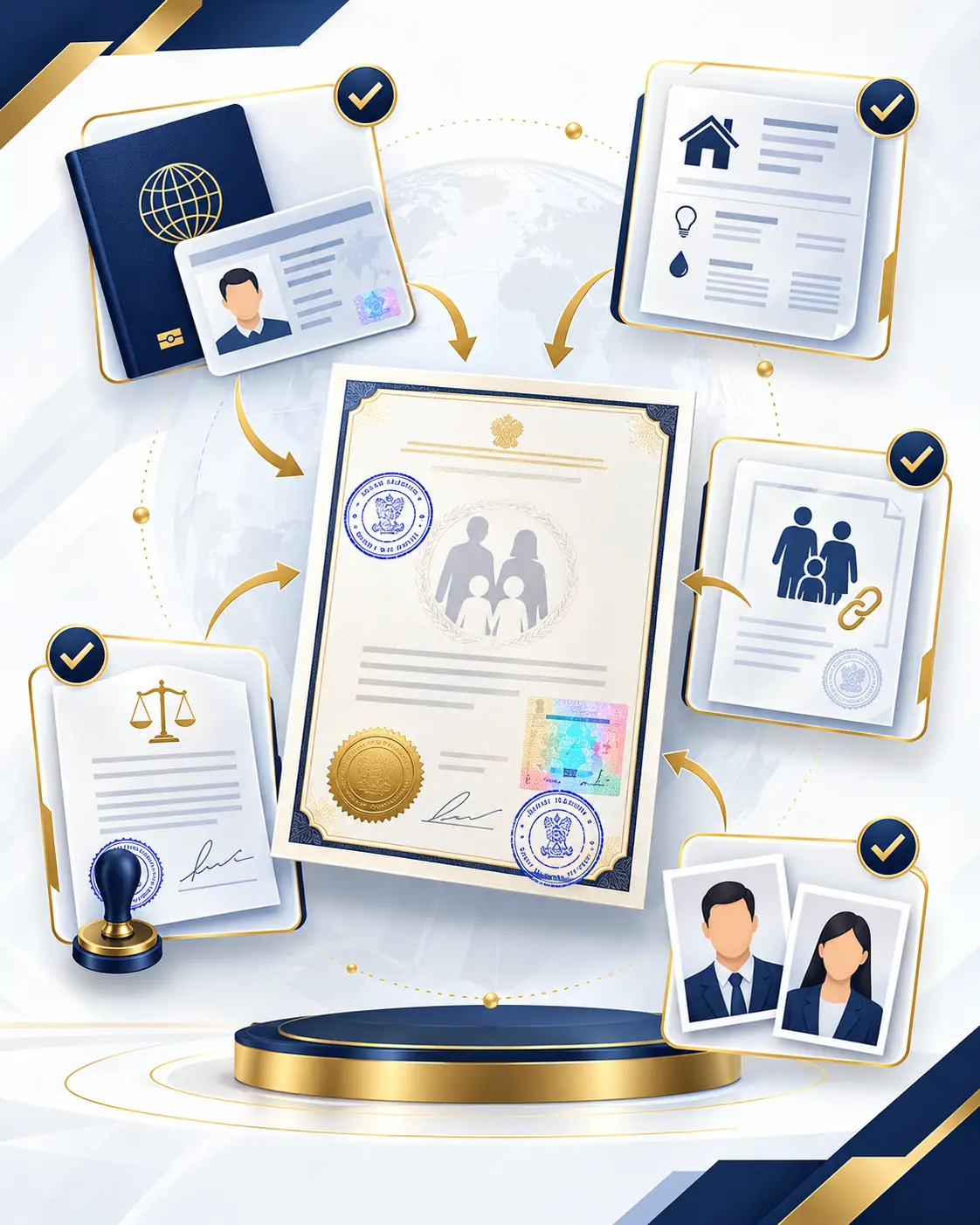
Understanding the Next of Kin Certificate Apostille Documents Required helps prevent delays caused by missing or inconsistent paperwork. The supporting file generally needs the relevant next-of-kin document together with identity, relationship, and other records required for authentication and overseas use. The exact paperwork can vary according to the document and receiving authority.
This guide explains the documents commonly checked before apostille, including supporting identity and relationship evidence, and how requirements may differ by individual case. It will also help readers understand what should be verified before submission so the document can follow the appropriate authentication and apostille procedure in India.
The supporting file becomes important when a Next of Kin Certificate must be authenticated for use outside India. The exact evidence can vary because the document may be issued or prepared differently depending on the state, authority, and purpose.
A foreign authority, insurer, employer, or institution may ask for formal proof identifying the closest family member before accepting a claim, consent, or related application.
In death-related matters, the receiving authority may require a next-of-kin document together with death and relationship evidence. The supporting set should follow the recipient's stated requirements.
A next-of-kin document does not automatically establish guardianship. Where legal authority over a minor or dependent is relevant, review the separate guardianship authentication process.
The Next of Kin Certificate Apostille Documents Required should be checked against the issuing authority and the authentication route before submission. Supporting records used to obtain or verify the certificate are not automatically MEA submission documents in every case.
The primary document is the Next of Kin Certificate itself in a form accepted for state-level authentication or an eligible digital route where available.
Identity proof, a death certificate, marriage or birth records, affidavits, or other relationship evidence may be required by the issuing or verifying authority, depending on the case.
If another person submits the file, the relevant application channel may ask for authorization and identification. These should be included only when the chosen route specifically requires them.
Translation, additional consent, or extra relationship records may be requested by the receiving authority abroad. Confirm destination-specific requirements before treating any supporting-document list as complete.
After the Papers Required for Next of Kin Certificate Apostille are assembled, the document normally follows the applicable state or Union Territory pre-authentication route before MEA apostille.
Confirm names, dates, relationships, signatures, seals, and issuing details. Any mismatch between the certificate and supporting records should be resolved before authentication begins.
Personal documents generally require pre-authentication by the designated State or Union Territory authority before MEA processing. The exact office and route can vary, so check the state-level verification route for the document.
Once the prerequisite authentication is complete, the eligible document can proceed for MEA apostille through the applicable submission channel. A detailed step-by-step apostille sequence explains the broader workflow.
Apostille is intended for use in countries where the Hague Apostille Convention applies. If the destination does not accept apostille, a different attestation route may be necessary.
Timing depends on document readiness, state-level verification, the submission channel, and whether corrections are required before the certificate reaches MEA.
MEA's published service standard covers processing after a properly authenticated document is received, but the total end-to-end period can be longer because state verification occurs first. Review the separate processing-time factors before planning a deadline.
The practical arrangements can differ between online-supported and offline submission routes, document locations, and handling requirements. For related administrative planning outside this document checklist, see the apostille service planning details.
Even when the Next of Kin Certificate Apostille Documents Required appear complete, inconsistencies or an incorrect authentication route can delay or stop the file.
Different spellings, initials, dates, or relationship details across the certificate and supporting records can trigger additional verification or correction before processing continues.
Submitting a personal document without the prerequisite state or Union Territory authentication can make the file ineligible for the next stage.
Illegible seals, signatures, overwriting, damaged pages, or unclear issuing information can prevent reliable verification and may require a corrected or reissued document.
Using apostille for a destination that requires another legalization route can cause avoidable rework. Review the common rejection causes before submission.
Use this Next of Kin Certificate Apostille Checklist to confirm the file is consistent before starting authentication.
These answers clarify common questions about Required Documents for Next of Kin Certificate Apostille and how supporting records are used.
No. A passport or other identity copy may be requested by an issuing authority, verification office, service channel, or overseas recipient, but it should not be treated as a universal MEA requirement for every case.
Only when the receiving authority requires those records to be separately authenticated. A marriage certificate, birth certificate, or other relationship document does not automatically need apostille simply because it supported the next-of-kin application.
The acceptable format depends on the processing route. Traditional apostille procedures generally rely on an authenticated original document, while eligible digital documents may follow an approved electronic verification route.
For personal documents, the designated State or Union Territory authority normally performs the required pre-authentication. The responsible office can differ according to where and how the document was issued.
No. A next-of-kin document identifies a family relationship for a particular purpose, while guardianship establishes legal authority over another person. The documents and legal basis are different.
Yes. The recipient may require additional relationship proof, consent, translation, or a different legalization route. Confirming those conditions early helps keep the Next of Kin Certificate Apostille Requirements accurate for the actual use case.
Your Trust, Our Responsibility — That’s a G-AS Commitment.
Get Document Guidance