
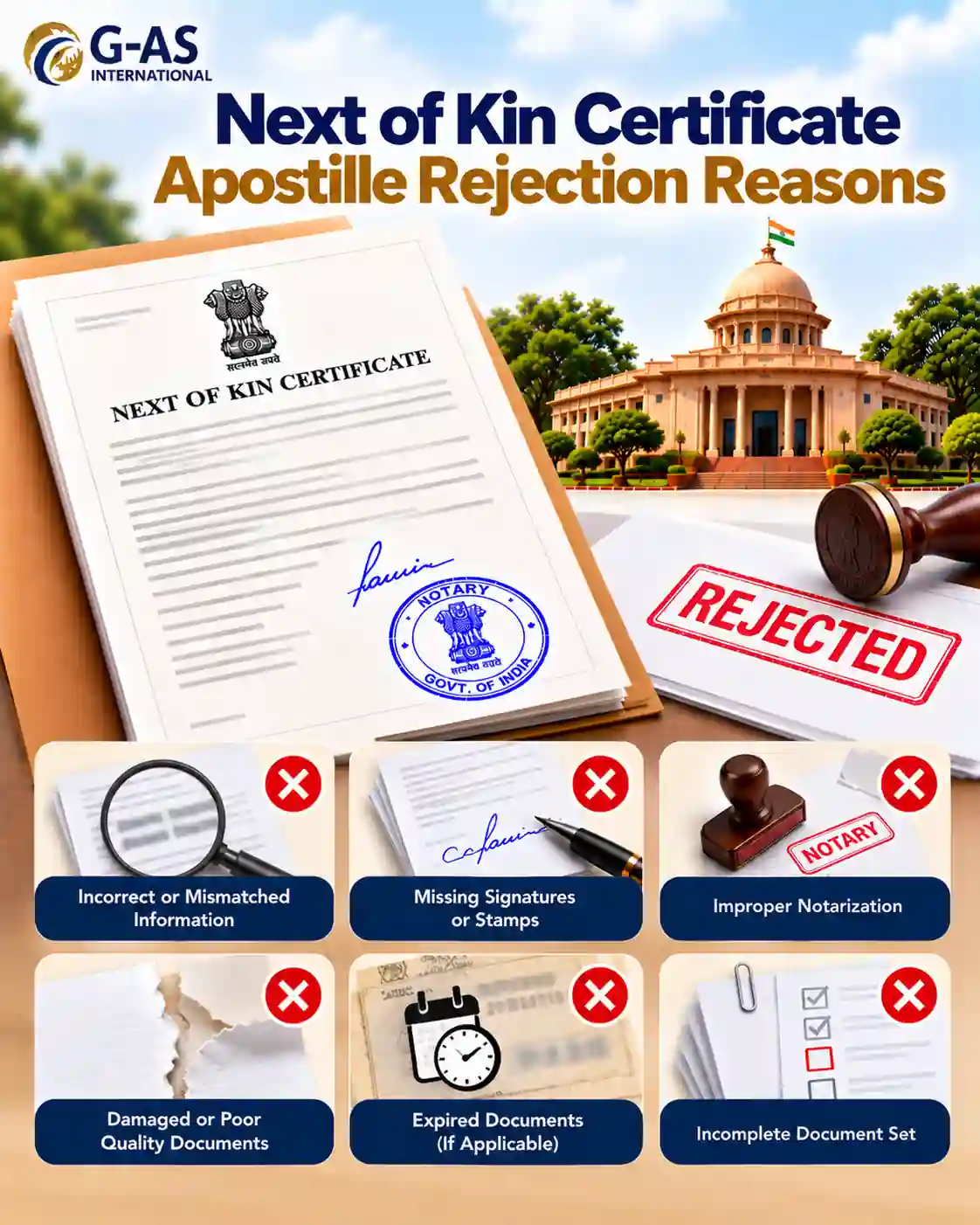
Next of Kin Certificate Apostille Rejection Reasons often involve incomplete pre-authentication, inconsistent document details, missing supporting records, or an incorrect verification route. In India, documents requiring apostille generally need authentication from the appropriate authority before submission, while the MEA legalises them based on the signature of designated authorities.
This article explains why a Next of Kin Certificate apostille may be returned, delayed, or refused and how applicants can reduce avoidable errors. It covers document mismatches, authentication problems, unsuitable copies, missing requirements, and practical checks that can help prevent common Next of Kin Certificate apostille mistakes.
Understanding Next of Kin Certificate Apostille Rejection Reasons starts with identifying the stage where the problem occurred. Common risk points include document details, supporting records, authentication, and the verification route followed before submission.
Names, dates, relationship details, spellings, or reference numbers that conflict with supporting records can raise verification questions and may require correction before processing continues.
The correct authentication path can depend on the document's issuing authority and classification. Missing a required verification stage or using an unsuitable authority may stop the application from progressing.
An apostille authenticates the origin of a public document, but an overseas authority may still request supporting records, translations, or evidence confirming the stated family relationship.
Before submission, compare the certificate and supporting papers carefully. Requirements may vary, so review the document preparation requirements before arranging authentication.
Use the document version accepted for the applicable procedure. A draft, incomplete document, altered scan, or unsupported photocopy may not be suitable for authentication.
Check names, dates, relationship descriptions, issuing references, signatures, seals, and other identifying information against the supporting records before submission.
Identity or relationship records may be required depending on the issuing authority, submission route, purpose, and overseas requirement. The same supporting documents do not necessarily apply to every case.
Signatures, stamps, seals, registration details, and printed information should remain clear and readable. Damage, overwriting, missing pages, or unexplained corrections can result in additional verification.
When an application is returned, identify the exact problem before resubmitting. Review the complete apostille procedure to determine where a correction is required.
Determine whether the return relates to the certificate itself, inconsistent supporting records, missing authentication, document condition, or an additional requirement raised by the receiving authority.
Confirm the issuing authority and authentication chain before proceeding. The document verification route can help identify where authentication should occur before final processing.
If the certificate contains an actual spelling, date, relationship, or registration error, the correction should be handled through the appropriate issuing authority instead of manually changing the document.
Review the corrected certificate, supporting records, authentication, document condition, and destination requirements together before resubmitting to reduce the risk of the same problem occurring again.
Several avoidable document and verification problems can interrupt processing. Recognizing them before submission can reduce unnecessary corrections, additional checks, and repeated applications.
A scan or photocopy may be unsuitable where the applicable process requires an original, certified copy, or another acceptable document format.
Sending the certificate through an authority that does not match its origin or required authentication path may result in a return or further verification.
Even minor inconsistencies between the certificate and supporting documents can create questions about identity or relationship and may require clarification.
Document correction, authority verification, or reissue can extend the overall timeline. Review expected processing timelines when planning document use abroad.
A structured review before submission can identify many preventable problems and confirm that the certificate follows the appropriate authentication path.
These answers address practical concerns that often arise when preparing a Next of Kin Certificate for international use.
A submission may be returned because of an unsuitable document format, inconsistent details, missing authentication, unclear seals or signatures, or a verification route that does not match the document's origin.
Yes. A spelling difference can require clarification when it affects identity, relationship, or record matching. Genuine errors should be corrected through the appropriate issuing authority when necessary.
No. An apostille authenticates the origin of the public document and the relevant signature or seal. The receiving authority may still assess its contents and supporting evidence separately.
Yes. The procedure can vary by document type and issuing authority. A guardianship-related document, for example, should be reviewed separately using the guardianship document authentication process.
No. Handwritten alterations, overwritten information, or unofficial changes can create further verification problems. Required corrections should follow the procedure of the competent issuing authority.
Identify the reason for the return, correct the source issue, verify the authentication route again, and review the complete document set before resubmitting.
Your Trust, Our Responsibility — That’s a G-AS Commitment.
Get Document Guidance