
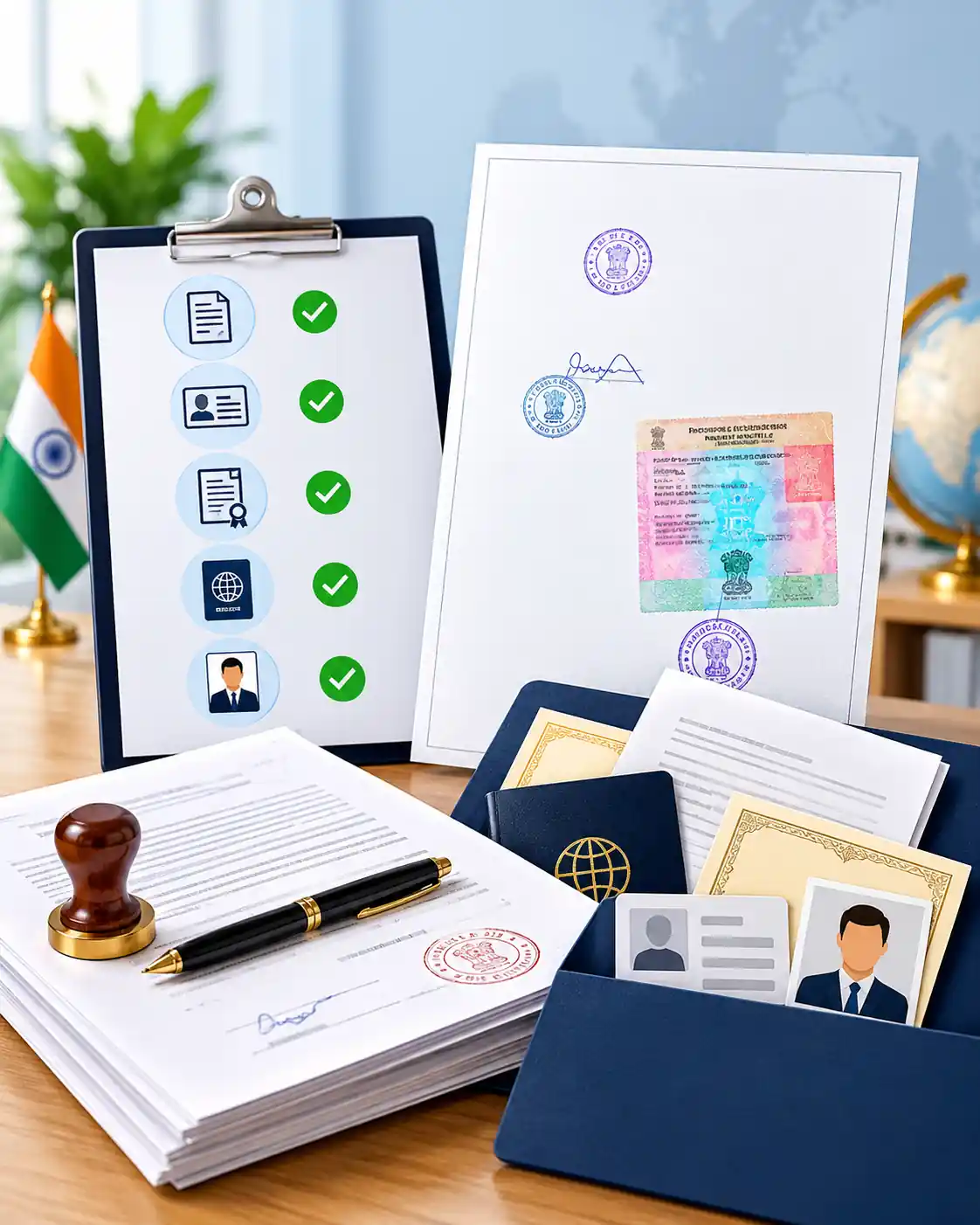
Affidavit Apostille Documents Required usually include the original properly drafted and notarized affidavit, a clear passport copy, and supporting records connected to the declaration. Depending on whether the affidavit covers a name change, single status, address, relationship, consent, or another purpose, additional proof may be needed.
This guide explains which papers to prepare, which supporting documents may apply to different affidavit types, what details should match across records, and what to check before submission. It will also help you understand why requirements can differ by verification route, destination country, and the authority receiving the apostilled affidavit.
Affidavit Apostille Documents Required depend mainly on what the affidavit declares, how it was executed, and the foreign authority that will receive it.
Affidavits may support declarations about name, marital status, family circumstances, residence, consent, or other personal facts. When a court-issued divorce record is also required, check the divorce-decree authentication procedure separately.
An affidavit can sometimes accompany visa, residency, immigration, or background documentation. If a police certificate is requested independently, follow the relevant police-clearance apostille procedure rather than treating the affidavit as a substitute.
Affidavits may be used with succession, inheritance, or family-related records. Where proof of death is separately requested, the death-certificate apostille procedure should be checked for that document itself.
The core paperwork is usually straightforward, but the exact Affidavit Apostille Requirements can change according to the declaration, verification route, and receiving authority.
Prepare the affidavit in the form required for its intended purpose, with the relevant signatures, notarization, certification, or competent-authority action completed where applicable.
For offline MEA submission channels, a photocopy of the applicant's passport is generally submitted with the document; other identity records may be needed for specific affidavit purposes.
Supporting evidence may include civil-status, address, name-change, relationship, court, or other records that substantiate the declaration when the receiving authority or verification authority requires them.
Affidavit Apostille Documents Required are not identical for every case. Confirm whether the authority expects an original, true copy, translation, supporting certificate, or prior authentication.
Once the Papers Required for Affidavit Apostille are ready, the document must follow the authentication route applicable to its form and place of execution.
Check that the destination accepts apostilles and that the receiving authority wants the affidavit in its current form. This avoids preparing Affidavit Apostille Documents Required for an unsuitable legalization route.
Personal documents not handled through an eligible digital route generally need authentication by the designated State or Union Territory authority before MEA processing. Review the pre-authentication route guide for route-specific details.
After the required verification is complete, the eligible affidavit proceeds through the authorized submission route for MEA apostille. The step-by-step apostille procedure explains the sequence in more detail.
After apostille issuance, verify the document details and apostille particulars before sending it abroad. Keep a clear scan of the completed affidavit and related papers for your records.
Preparing the correct Affidavit Apostille Documents Required can reduce avoidable verification queries, but the overall timeline and cost still vary by route.
State or Union Territory verification, document condition, submission channel, authority workload, corrections, and delivery can all affect completion. Review the detailed turnaround factors for affidavits when planning a deadline.
Total expense can include the official apostille charge plus applicable verification, submission, scanning, handling, delivery, or professional-service costs. See the separate affidavit cost breakdown before estimating the final amount.
Many delays begin before submission, especially when the affidavit, supporting records, or selected authentication route do not match the actual requirement.
Material differences in names, dates, addresses, or other declared facts can trigger questions and may require correction or supporting evidence before processing continues.
Missing signatures, incomplete declarations, unsuitable notarization, or absent competent-authority action can make the submitted affidavit unsuitable for the intended verification route.
Using a route that does not match the document or State or Union Territory requirement can cause delay and repeat submission of the Affidavit Apostille Documents Required.
Some declarations depend on additional records. Review the common rejection and correction causes before sending the affidavit for processing.
Use this short review to confirm that the Affidavit Apostille Documents Required are complete and consistent before starting authentication.
These answers address practical questions about Documents for Affidavit Apostille and supporting paperwork.
For the standard offline MEA submission process, a passport photocopy is generally submitted with the document. Requirements can differ for eligible e-Sanad workflows or purpose-specific verification, so confirm the active route first.
MEA legalizes original documents or eligible true copies rather than ordinary photocopies. The acceptable form of an affidavit can also depend on how it was executed and authenticated.
No. Required Documents for Affidavit Apostille vary by declaration and purpose. Supporting certificates are needed only when the competent or receiving authority requires evidence for the facts stated.
An ordinary photocopy is not treated the same as an original or eligible true copy. Confirm what form the authority accepts before preparing the Affidavit Apostille Documents Required.
No. The route can depend on the affidavit type, place of execution, State or Union Territory procedure, available digital verification, and the requirements of the foreign receiving authority.
If a foreign authority asks for both the affidavit and a separate civil, court, or police record, each requested document should be checked for its own authentication requirement rather than assumed to be covered by the affidavit.
Your Trust, Our Responsibility — That’s a G-AS Commitment.
Get Document Guidance