
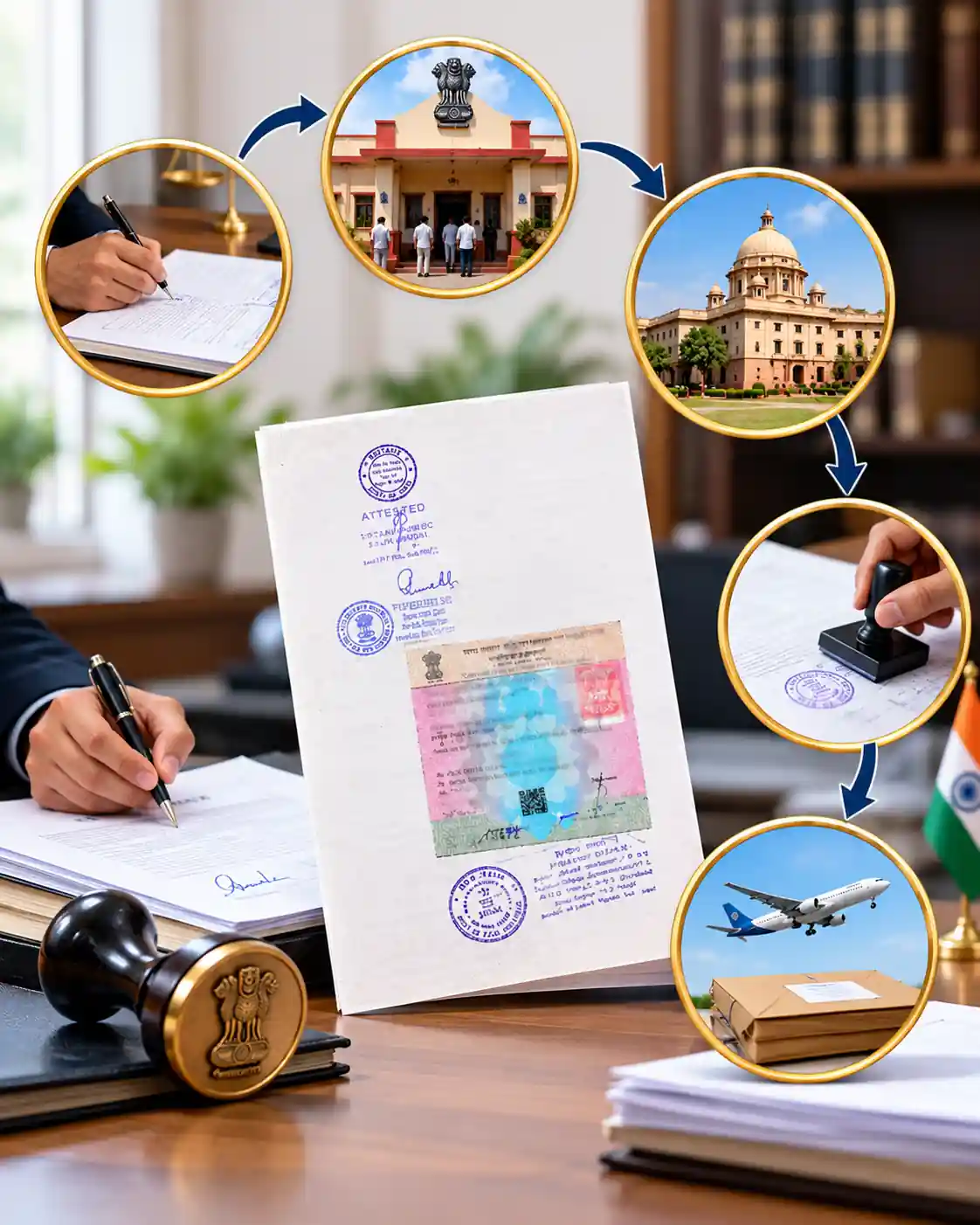
The Affidavit Apostille Process is the procedure used to authenticate an affidavit issued in India for official use in a Hague Apostille Convention country. It generally involves proper execution and notarisation of the affidavit, required pre-authentication by the designated State or Union Territory authority, and the final apostille issued by the Ministry of External Affairs (MEA).
This guide explains each stage in practical order, including where notarisation fits, which authority verifies the document before MEA, and what to check before submission. It also clarifies common affidavit apostille steps, likely document requirements, processing considerations, and mistakes that can cause delays or rejection.
The Affidavit Apostille Process is relevant when an affidavit executed in India must be presented to an overseas authority that accepts apostilles under the Hague Apostille Convention.
An affidavit may support a name variation, one-and-the-same-person statement, address declaration or another personal fact when the foreign recipient requests a sworn declaration.
Single-status or family declarations may be required for marriage, immigration or civil-record purposes. If a previous marriage ended, the authority may also request a court record; see the divorce decree authentication route.
Affidavits can accompany residence, sponsorship or immigration files. When a background record is requested separately, it follows its own PCC authentication sequence.
Requirements vary by affidavit type, State or Union Territory, submission route and destination, so document readiness should be checked before the Affidavit Apostille Process begins.
The affidavit should contain accurate names, dates and declarations and be signed or notarised in the manner required for its intended use.
Identity copies, document photocopies, authorization or supporting records may be requested depending on the route. Review the affidavit document checklist before submission.
Where State, Union Territory, SDM or another competent authority verification applies, that stage must be completed before the document proceeds to MEA.
An affidavit does not replace an official certificate when the overseas authority asks for the underlying record. For estate matters, review the relevant death certificate authentication steps.
The Affidavit MEA Apostille Process should follow the document's actual verification route instead of assuming one identical sequence for every affidavit.
First confirm that the destination and receiving authority accept an apostille for the intended purpose. Check wording, language and whether a separate official certificate is required before starting the Affidavit Apostille Process.
A private affidavit commonly needs to be signed before a Notary Public or other competent official. Names, signatures, dates, seals and notarial particulars should be clear before further authentication.
The pre-authentication authority depends on the affidavit, jurisdiction and accepted route. It may involve a designated State authority, Home Department, SDM or another competent channel. Check the verification-route explanation.
After the required verification, the eligible document proceeds through the applicable MEA channel. The apostille authenticates the document's official origin or relevant signature and seal; it does not certify every statement in the affidavit.
Timing and total cost depend on the Affidavit Apostille Process route, document readiness, authority processing and submission method.
The complete Affidavit Apostille Process can take longer than the MEA stage because notarisation, pre-authentication, corrections and delivery may occur first. MEA's current citizen charter states that apostille processing is generally within seven working days after receipt by MEA. Review the detailed timing factors.
MEA currently lists a government apostille fee of ₹50 per document. Authorized handling, scanning, notarisation, pre-authentication, courier and service costs can be separate. See the apostille cost breakdown for the main components.
Most avoidable delays occur before final apostille when the document, supporting information or verification route is incomplete.
Misspelled names, inconsistent dates, vague declarations or missing signatures can require correction before authentication continues.
Submitting without the required verification can stop the Affidavit Apostille Process and send the document back to an earlier stage.
A foreign authority may require specific wording, a separate certificate or a translation. Apostille does not make an unsuitable underlying document acceptable.
Unclear seals, unauthorized alterations or unsuitable copies may trigger rework. Review the common rejection causes before dispatch.
A short review can prevent corrections and keep the Affidavit Apostille Process on the correct route.
These answers cover practical questions that commonly arise before starting the Affidavit Apostille Process.
Not automatically. The document must be suitable for authentication, follow the required Indian verification route and be intended for an authority that accepts an apostille.
Not in every case. Many affidavit routes require additional pre-authentication by a competent State, Union Territory, SDM or other designated authority before the Affidavit Apostille Process reaches MEA.
No. It authenticates the origin of the public document or relevant official signature, capacity, seal or stamp; it does not independently verify the truth of the declaration.
Eligibility depends on whether the relevant document and issuing or verifying authority are supported by e-Sanad. Otherwise, the applicable physical route continues to apply.
For a destination where the Hague Apostille Convention applies, the document follows the applicable Indian verification and apostille route. Non-Hague destinations may instead require normal attestation and embassy or consular legalization.
Your Trust, Our Responsibility — That’s a G-AS Commitment.
Get Document Guidance