
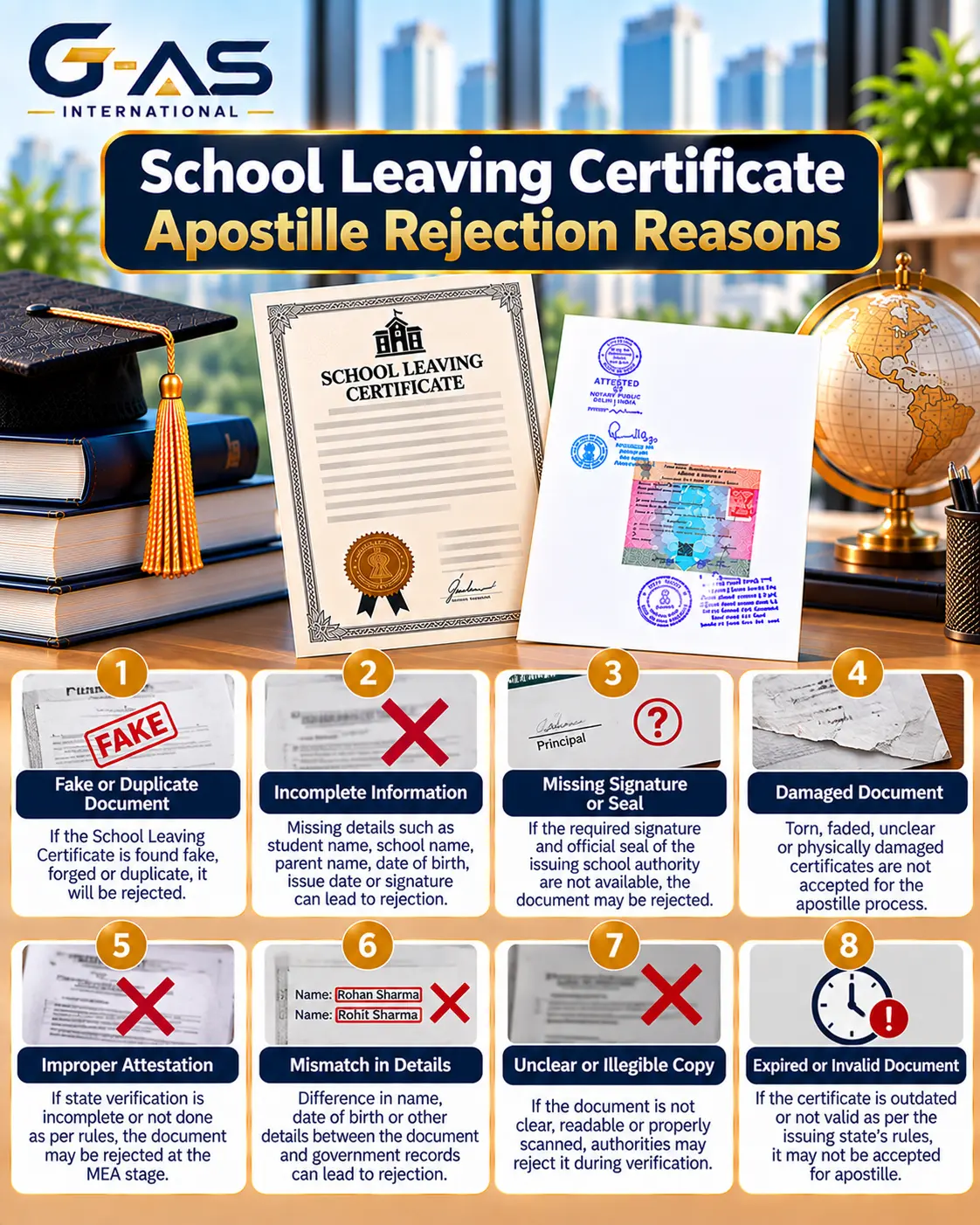
Bonafide Certificate Apostille Rejection Reasons often relate to document errors, incomplete verification, incorrect details, or problems with the certificate itself. Even a genuine bonafide certificate may face delays or rejection when names do not match supporting documents, required signatures are unclear, or the prescribed authentication route has not been completed correctly.
Understanding why Bonafide Certificate apostille gets rejected can help applicants identify problems before submission. This guide explains common Bonafide Certificate apostille mistakes, verification issues, documentation problems, and practical rejection solutions that can help you prepare the certificate more carefully and reduce avoidable processing complications.
Bonafide Certificate Apostille Rejection Reasons usually arise when the document cannot move cleanly through verification or does not match what the receiving authority expects.
Spelling differences, missing institutional details, unclear dates, or inconsistent information can create Bonafide Certificate Apostille Problems and may require correction before further authentication.
A certificate may be held for additional verification when the signature, seal, designation, or issuing institution cannot be confirmed through the required authentication channel.
A bonafide certificate may not satisfy a receiving institution that specifically asks for another record. When a transfer certificate is required, review the correct transfer-certificate procedure instead of substituting documents.
A careful document review can prevent avoidable Bonafide Certificate Apostille Rejection Reasons before the certificate enters the authentication chain.
Names, initials, dates, and other identifying details should be consistent with the records being used for the application or overseas submission.
The certificate should clearly show the issuing school, college, university, employer, or other institution and the authorised person who signed it.
Supporting requirements can vary with the document, issuing authority, route, and destination. Use the document preparation checklist before submission.
Before submission, make sure the document is readable and that seals, signatures, and institutional details have not been obscured by damage, poor copying, or unauthorised alteration.
Understanding the authentication sequence makes Bonafide Certificate Apostille Rejection Reasons easier to identify because an error at an earlier stage can stop later processing.
First establish how the bonafide certificate is being classified for the specific purpose. Its category and issuing authority can affect the appropriate verification path before MEA apostille.
Indian documents may require authentication through an appropriate designated authority before MEA apostille, depending on the applicable route. Review the pre-authentication route before MEA submission to avoid using an unsuitable channel.
Once the necessary prior verification is complete, the document can proceed through the applicable apostille channel. For a fuller chronological explanation, see the step-by-step verification flow.
An apostille is relevant when the Apostille Convention applies between the document's country of origin and intended destination and the receiving authority requires that form of authentication.
Bonafide Certificate Apostille Rejection Reasons can also affect timing when a document must be corrected, reverified, or resubmitted.
Additional verification, replacement of an incorrect certificate, institutional confirmation, holidays, or changes in the required route can extend completion. Review the timeline factors that can affect completion before planning around a fixed deadline.
If the certificate itself needs correction, resolve that issue before focusing on other administrative arrangements. The related administrative planning guide can be reviewed separately from rejection troubleshooting.
The most useful Bonafide Certificate Apostille Rejection Solutions start by identifying exactly where the document or verification sequence failed.
Differences in names, initials, institution details, or dates can trigger queries. Obtain a corrected certificate rather than trying to explain a preventable inconsistency later.
Sending a document through an unsuitable pre-authentication path can lead to return or further verification. Confirm the appropriate route for that certificate before submission.
An apostille authenticates the origin of a public document, but the overseas recipient may still have its own requirements concerning the document type, content, purpose, or acceptable issue date.
Alterations after verification can create a mismatch between the underlying document and its authentication. Necessary corrections should be completed before proceeding through the final apostille stage.
Use these checks before submission to reduce preventable errors and unnecessary repeat processing.
Bonafide Certificate Apostille Rejection Reasons commonly include incorrect certificate details, an unsuitable verification route, unclear signatures or seals, document damage, and a mismatch between the submitted certificate and the recipient's stated requirement.
Yes. A genuine certificate can still require correction or further verification if its details are inconsistent, the signatory cannot be verified, or the required authentication sequence has not been completed correctly.
No. An apostille authenticates the origin of the public document, including the relevant signature, seal, or official capacity. It does not certify the truth of every statement contained in the underlying document.
Ask the issuing institution to correct or reissue the certificate before continuing. Avoid making manual changes because an altered document can create further verification problems.
Yes. Apostille does not determine which document a university, employer, immigration authority, or other recipient must accept. Confirm the exact document requirement directly with the receiving authority.
Check the document, signatory, supporting details, authentication route, destination-country applicability, and recipient requirement before submission. Correcting errors early can prevent avoidable repeat verification.
Your Trust, Our Responsibility — That’s a G-AS Commitment.
Get Document Guidance