
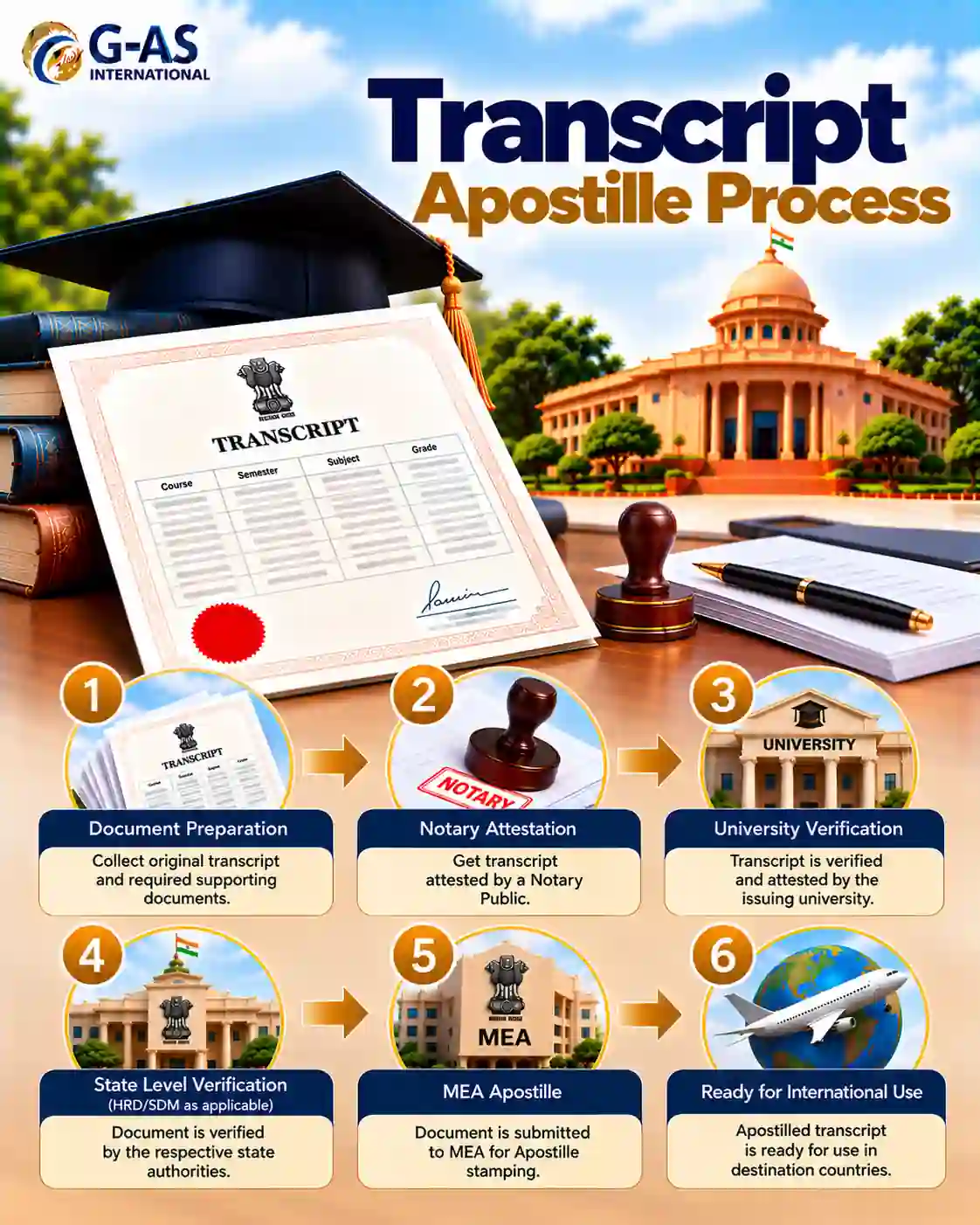
The Transfer Certificate Apostille Process is used to authenticate a school Transfer Certificate or Leaving Certificate issued in India for submission in a country where an apostille is accepted. Depending on the document and applicable verification route, preliminary authentication may be completed before the certificate proceeds to the Ministry of External Affairs (MEA) for apostille.
This guide explains the typical Transfer Certificate Apostille Procedure, the authorities that may be involved, and how preliminary verification connects with the MEA stage. It will also help readers understand the usual Transfer Certificate Apostille Steps, possible route variations, and important checks to make before beginning the process.
The Transfer Certificate Apostille Process may be required when an Indian school record must be presented to an educational institution or other competent authority abroad.
A foreign school, college, or education authority may request an authenticated Transfer Certificate to confirm previous enrolment, academic movement, or formal departure from an Indian institution.
Students changing education systems may need the certificate authenticated before it is accepted as evidence of their previous school record or transfer status.
If the document is issued as a School Leaving Certificate rather than a Transfer Certificate, review the related school-leaving certificate authentication workflow before proceeding.
Before beginning the Transfer Certificate Apostille Process, confirm that the certificate and supporting submission papers meet the requirements of the applicable authentication route.
The certificate should clearly show the issuing institution, student information, relevant dates, and the authorised signature, seal, or other verification details.
The applicable filing channel may require identification or document copies in addition to the certificate being processed. Check the document submission checklist before dispatch.
Names, school information, dates, certificate numbers, seals, and signatures should be legible and consistent with the underlying institutional record.
A Transfer Certificate does not necessarily follow an identical verification method in every case. The issuing institution, State, document format, and current verification system can affect the required route.
The Transfer Certificate Apostille Procedure should follow the authentication route applicable to the certificate rather than assuming that every school document uses exactly the same sequence.
First identify the school, board, or institution that issued the certificate and confirm that the receiving country and organisation require an apostille. This determines whether apostille is the appropriate form of legalization.
The certificate may require verification through the designated State or Union Territory educational authority before MEA processing, while eligible digitally verifiable records can follow the applicable electronic route. Review the pre-authentication route guidance for this stage.
Where preliminary authentication is required, the competent authority verifies the recognised signature or seal associated with the educational document. Completing this stage correctly allows the Transfer Certificate Apostille Process to proceed to MEA.
After the required verification is complete, the eligible certificate proceeds through the applicable authorised submission channel for Ministry of External Affairs apostille processing. The completed apostille should remain attached to the authenticated document.
The overall duration of the Transfer Certificate Apostille Process depends on more than the final MEA stage.
Issuer verification, State or Union Territory authentication, document corrections, submission method, holidays, and document movement can affect the total turnaround. Applicants planning around a deadline can review the separate turnaround and delay factors.
Financial details are best checked separately because they can depend on the submission method and services involved. Refer to the dedicated charges overview rather than assuming one amount applies to every case.
Several avoidable issues can interrupt the Transfer Certificate Apostille Process before the document reaches or completes the required authentication stages.
Sending the certificate through an unsuitable authentication path can cause delays or require the applicant to restart from the appropriate authority.
Unreadable seals, altered entries, missing signatures, or inconsistencies in names and dates can lead to additional verification or correction requests.
A certificate submitted before completing the applicable State or Union Territory authentication may not be ready for MEA apostille processing.
Apostille is not the correct route for every overseas destination or receiving organisation. Review common rejection and correction issues before resubmitting a returned document.
A short review before starting can prevent avoidable problems during the Transfer Certificate Apostille Process.
Begin by identifying the issuing institution and destination requirement. Then determine whether State or Union Territory pre-authentication or an eligible digital verification route applies before the certificate proceeds for MEA apostille.
No. The Transfer Certificate Apostille Process can vary according to the issuing authority, State or Union Territory, certificate format, available verification system, and current procedural requirements.
A Transfer Certificate issued as part of a student's school record is generally handled as an educational document. The exact authentication authority should still be confirmed for the particular certificate.
Material errors or unclear information may need correction or confirmation from the issuing institution before authentication. Resolving discrepancies first can prevent problems at later verification stages.
If apostille is not applicable to the destination or intended use, another attestation or legalization route may be required. Confirm the receiving authority's requirement before starting the Transfer Certificate Apostille Process.
Verify the issuing institution, document condition, destination requirement, applicable pre-authentication authority, and submission route. These checks help ensure the certificate enters the correct authentication process from the beginning.
Your Trust, Our Responsibility — That’s a G-AS Commitment.
Get Document Guidance