
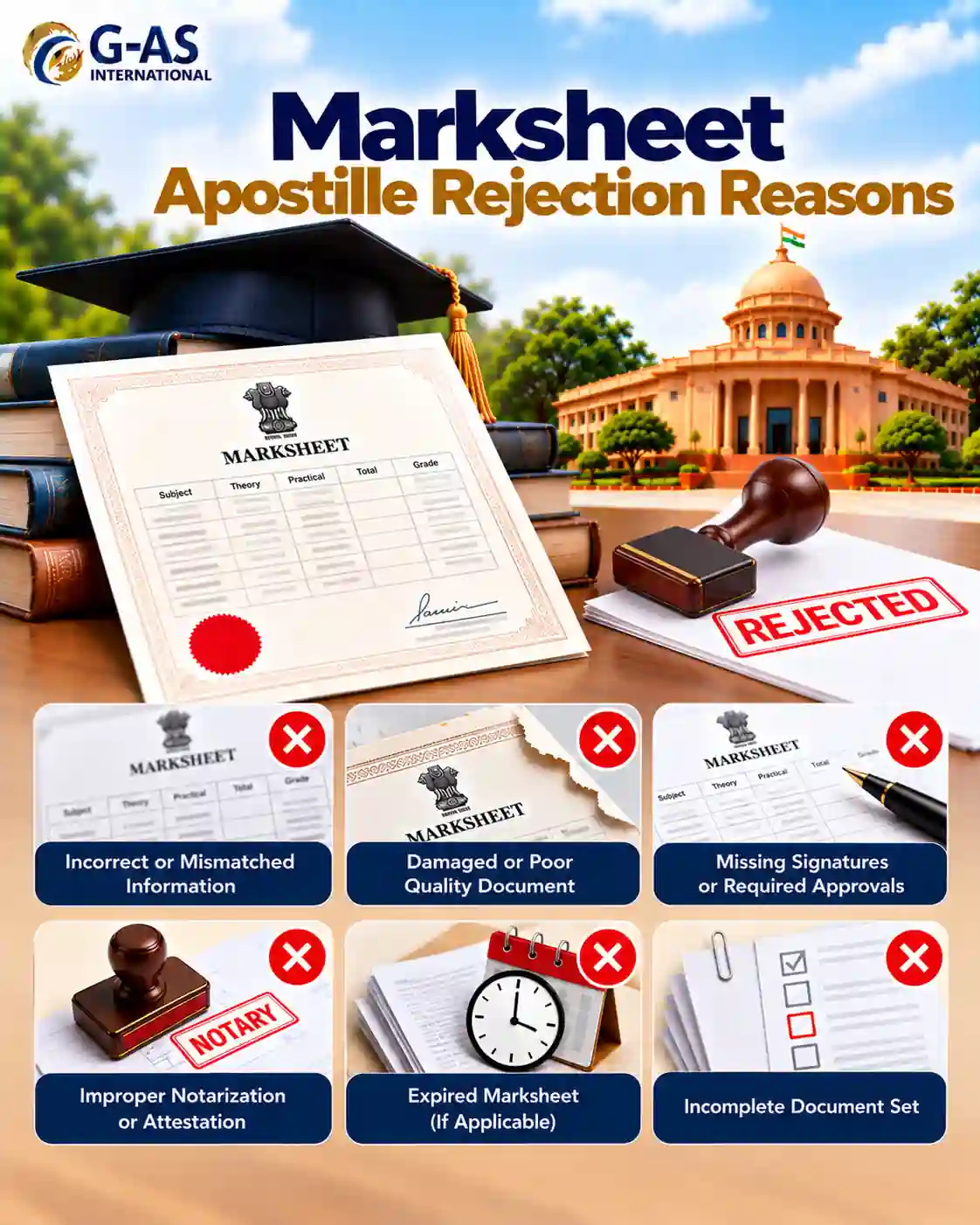
Understanding Marksheet Apostille Rejection Reasons can help prevent avoidable delays when preparing educational documents for use abroad. Applications may face problems because of incomplete pre-authentication, an incorrect verification route, document-detail inconsistencies, or requirements that do not match the destination country.
This article explains why marksheet apostille applications can be returned, which common mistakes to check before submission, and how the applicable verification route affects processing. It will also help readers identify document issues early and understand practical steps for correcting them before resubmission.
Marksheet Apostille Rejection Reasons become important whenever an academic record must pass verification before it can be apostilled for use abroad. Problems are easier to fix when the document, issuing authority and destination requirement are checked before submission.
A returned marksheet can affect admission or enrolment schedules. Confirm whether the institution needs semester-wise, year-wise, final or consolidated records before starting authentication.
Foreign evaluators and employers may ask for specific academic records. A correct apostille cannot replace a different document that the receiving organisation specifically requested.
A marksheet and degree are separate documents and may need separate checks. Review the degree certificate authentication workflow when both records are required.
Many Common Marksheet Apostille Mistakes begin with an incomplete document check. Requirements can vary by issuing authority and route, so verify the applicable records before submission.
The candidate name, examination details, institution name, seal and authorised signature should be clear enough for the issuing or designated authority to verify.
For MEA's physical route, its published guidance calls for the eligible original or true copy, a document photocopy and an applicant passport photocopy. See the submission document checklist for related preparation details.
Educational documents outside an applicable digital route generally need authentication by the designated State or Union Territory authority before MEA apostille processing.
Apostilling one marksheet does not automatically cover other semester records, a transcript or a degree. Confirm the exact academic document requested by the receiving organisation.
Marksheet Apostille Problems should be corrected at the stage where they arise. The appropriate response depends on whether the issue concerns the document, verification route, pre-authentication or destination requirement.
Check whether the file has a name or record mismatch, unclear issuer details, missing pre-authentication, an unsupported route, or a destination requirement that does not call for an apostille.
The route depends on the issuing authority and available verification channel. Review the state and authority verification route before repeating the same submission.
If the issuing institution cannot verify the marksheet because of an error, unreadable detail or inconsistent record, obtain the necessary correction, clarification or officially reissued document from the appropriate issuer.
After the required verification is complete, follow the step-by-step marksheet procedure. Once issued, Indian apostille details can be checked through the e-Sanad e-Register.
A correction can extend the overall timeline because document verification may need to be completed again before the file reaches the final apostille stage.
MEA's published Citizen's Charter lists apostille completion as usually within seven working days after the document is received by MEA. This does not include unpredictable time spent on university, board, State or Union Territory verification before MEA submission. Review turnaround factors for marksheet processing when planning a deadline.
If a marksheet must be corrected, reissued or re-verified, the earlier verification may not be sufficient for the revised document. Response time can therefore depend on the issuing institution and designated authentication authority. Applicants reviewing the wider submission process can also use this marksheet apostille planning reference.
This Marksheet Apostille Error Guide separates common pre-issue problems from problems involving the acceptance of an apostille after it has already been issued.
MEA legalises documents based on signatures from designated authorities. If the required educational authentication is missing or completed through the wrong route, the document may need correction before apostille.
Name differences, unclear seals, unreadable signatures, unexplained alterations or inconsistent academic details can lead the issuing or authentication authority to request clarification before verification is completed.
A recipient may require a consolidated marksheet, complete semester set, transcript or degree instead. Apostilling the wrong academic record does not satisfy a different document requirement.
Under the Hague framework, a properly issued apostille should not be refused merely because its appearance differs. A receiving organisation can still reject the underlying academic document for its own substantive requirements.
Use these Marksheet Apostille Rejection Solutions before submission to reduce avoidable queries and repeat verification.
These answers address practical questions that commonly arise after a marksheet is returned, questioned or delayed during authentication.
No. An apostille authenticates the origin of the public document, including the relevant signature, official capacity and seal. It does not judge grades, marks, percentage or academic merit.
Not merely for normal differences in design, colour or method of attachment. e-Sanad guidance states that refusal is limited to issues such as unverifiable origin or radical departure from required formal elements.
No. e-Sanad depends on the relevant document issuing authority and record being available through an integrated digital repository or supported verification arrangement. Other documents follow the applicable non-digital route.
Only when the receiving institution or authority requires the complete set. Some recipients request a consolidated record or selected academic documents, so confirm the written checklist first.
Yes. A mismatch can trigger a verification query when the academic record cannot be matched confidently with the applicant or institutional record. The correction method depends on the issuing authority.
Correct the specific issue first, confirm the proper verification route, complete any required pre-authentication and then resubmit through the applicable channel instead of repeating the same incomplete application.
Your Trust, Our Responsibility — That’s a G-AS Commitment.
Get Document Guidance