
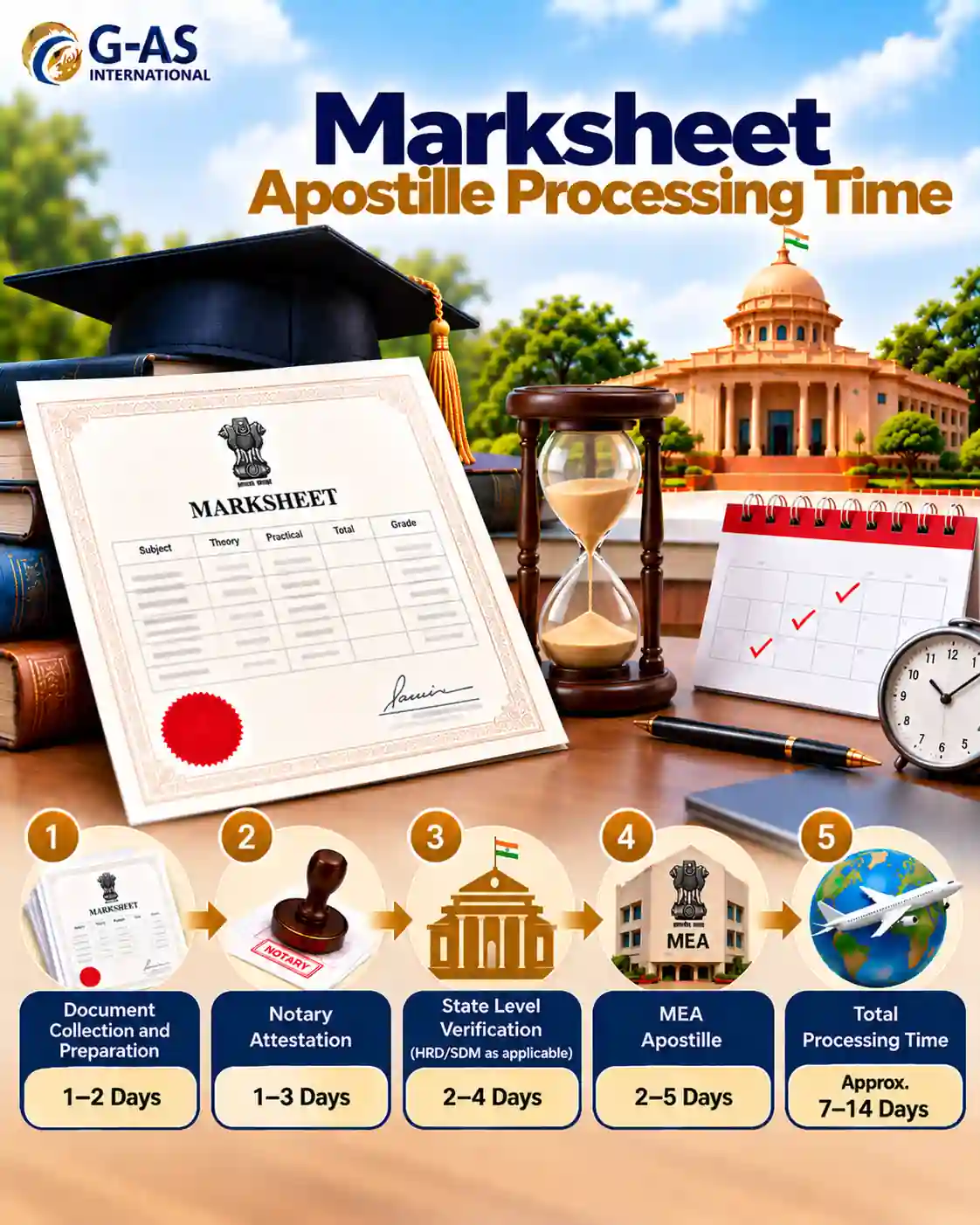
Marksheet Apostille Processing Time in India is not identical for every application. The overall timeline can vary according to the issuing board or university, document readiness, pre-authentication requirements, and the verification stage completed before the papers reach the Ministry of External Affairs.
This article explains the typical Marksheet Apostille Time, the stages that can affect processing, and the common reasons a case may take longer. It will help you understand the expected Marksheet Apostille Duration and plan your submission more realistically without assuming that every educational document follows exactly the same timeline.
Marksheet Apostille Processing Time becomes important when an overseas submission has a fixed deadline. The total period depends on document verification, the applicable pre-authentication route, MEA processing, and return handling.
Students may need apostilled marksheets before enrolment, credential evaluation, or document-verification deadlines. Starting early leaves time for issuer checks if the academic record cannot move directly to the final stage.
Employers and licensing bodies may request authenticated academic records with other qualifications. Knowing the likely Marksheet Apostille Timeline helps coordinate marksheets with related documents without assuming they will finish together.
A marksheet and degree may follow separate checks even when submitted for the same purpose. Review the degree certificate authentication route when both records are required.
Marksheet Apostille Processing Time can be affected when the academic record or supporting submission documents are incomplete, unclear, or unsuitable for the verification route that applies to the issuing authority.
Use the marksheet issued by the relevant board, university, or institution, with names, examination details, signatures, seals, and identifying information clearly readable.
For offline processing, the original document or accepted true copy is submitted with the required supporting copies. Preparing them correctly can prevent unnecessary interruptions to Marksheet Apostille Processing Time.
Some educational records can be verified through e-Sanad when the issuing authority and document repository are supported. Other records require the applicable State or Union Territory pre-authentication first.
Confirm whether the recipient needs one final marksheet, semester-wise records, or a consolidated marksheet. The supporting document checklist can help prevent avoidable resubmission.
The Time Required for Marksheet Apostille is usually shaped by what happens before the document reaches MEA. Marksheet Apostille Processing Time therefore depends heavily on the issuing authority and applicable verification channel.
First confirm that the receiving country and organisation actually require an apostille for the marksheet. Also verify which academic record is requested because unnecessary documents can create additional verification work.
Check the board or university that issued the document and whether its records are supported through e-Sanad. Because routes differ between issuers, selecting the correct verification path for academic records can directly affect Marksheet Apostille Processing Time.
Where the document is not handled through the applicable digital route, the relevant State or Union Territory authority must complete the required authentication before the document is submitted for MEA apostille.
After accepted pre-authentication or digital verification, the document proceeds to MEA for apostille. This stage forms only part of Marksheet Apostille Processing Time. Review the step-by-step marksheet authentication process for the broader sequence.
There is no single nationwide end-to-end Marksheet Apostille Processing Time because verification before MEA can vary by issuing authority, State or Union Territory, and digital availability.
MEA's current service timeline states that apostille is usually completed within seven working days after the document is received by MEA. Marksheet Apostille Processing Time can still be longer overall when earlier verification remains pending.
University, board, State, Union Territory, or digital repository verification may require additional time before MEA receives the document. The exact Marksheet Apostille Duration depends on record availability, document condition, issuing authority procedures, and any clarification required.
Marksheet Apostille Processing Time may increase when the document, verification route, or supporting submission does not satisfy the applicable requirements before final apostille.
Differences in the holder's name, examination details, institution information, or other key entries can trigger clarification or correction before verification can continue.
Submitting through the wrong verification path can stop progress. Check the issuing authority and current route before dispatching the marksheet for further processing.
Obscured seals, unclear signatures, damaged sections, or unexplained alterations can make authentication difficult and may require a clean reissued document from the competent issuer.
If a document is returned, address the stated problem before resubmission. The common return and correction issues provide a useful pre-check before trying again.
Before estimating Marksheet Apostille Processing Time, complete a short document and route review so preventable errors do not interrupt the application after submission.
These answers clarify common questions about processing, verification routes, preparation, and possible delays.
MEA currently states that apostille is usually completed within seven working days after receipt. Any university, board, State, Union Territory, or document-verification stage before MEA can extend the overall timeline.
No. The route can differ according to the issuing board or university, State or Union Territory requirements, and whether the document is available through an integrated digital repository.
It can streamline processing for supported records because the document is verified through the connected issuing authority or repository. Eligibility depends on whether that particular document and issuer are integrated.
Yes. Material mismatches, unclear seals, damaged records, or missing route requirements may lead to additional checks, corrections, or a fresh submission before apostille can be completed.
Yes. The authority-processing period and the time needed to return the completed document are different. Allow additional time for collection, dispatch, weekends, holidays, and destination-specific delivery conditions.
For information outside the timing topic, review related marksheet apostille planning details so the overall submission can be organised before documents are sent.
Your Trust, Our Responsibility — That’s a G-AS Commitment.
Get Document Guidance