
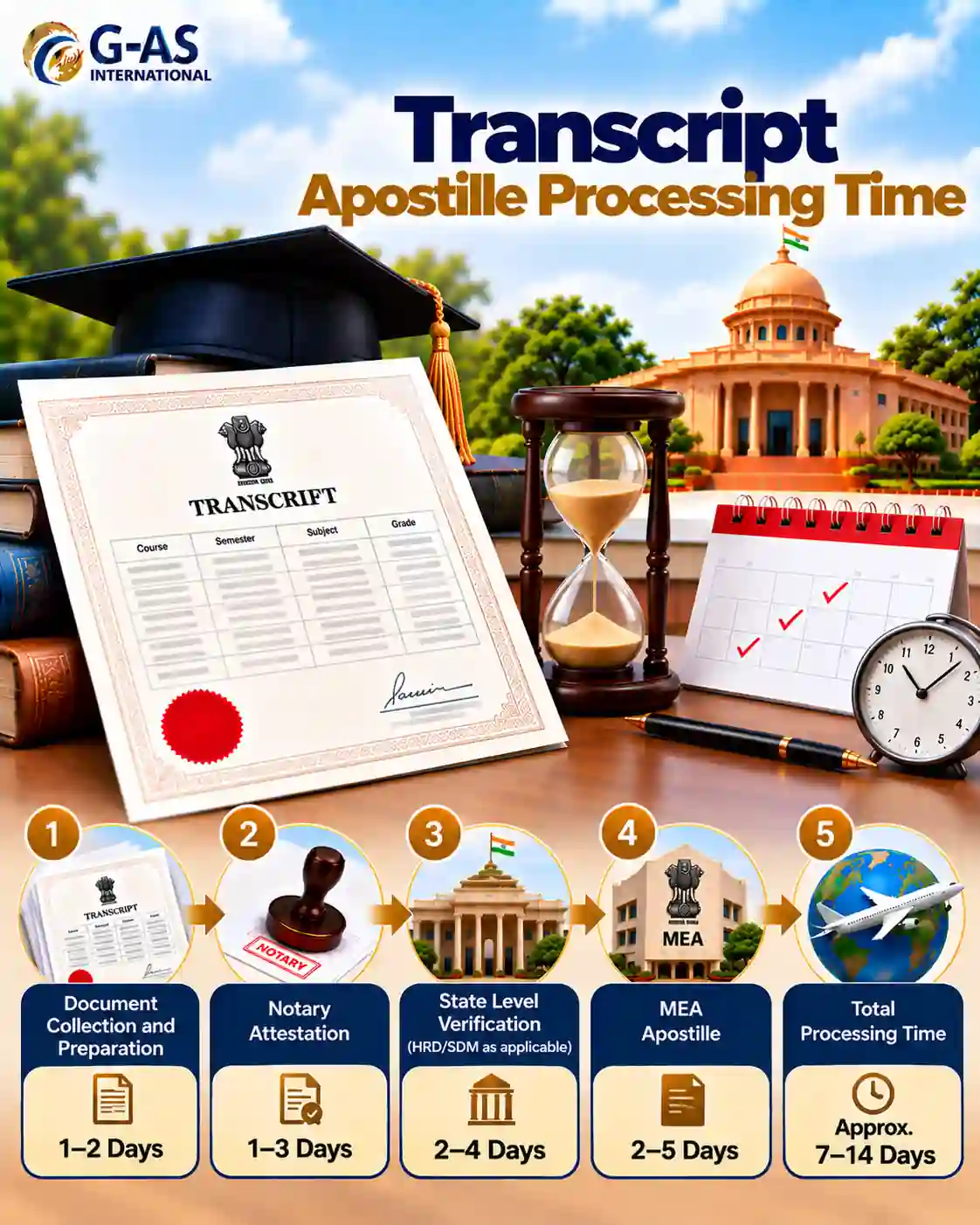
Transcript Apostille Processing Time can vary because an academic transcript may require verification or prior authentication before it reaches the Ministry of External Affairs for apostille. The overall timeline therefore depends on the authentication route, issuing university or state, document readiness, and any verification requirements.
This article explains the typical Transcript Apostille Time, what can extend the Transcript Apostille Duration, and why two applicants may experience different timelines. It will also help readers understand how university verification, prior authentication, MEA processing, document issues, and delivery can affect the total time required.
Transcript Apostille Processing Time is mainly influenced by what must happen before the transcript reaches the final apostille stage. Academic records often need verification through the appropriate educational route.
The issuing university may need to confirm the transcript, academic record, authorised signature or related details. Response speed can therefore affect the overall Transcript Apostille Timeline.
The correct route depends on the transcript and issuing authority. Understanding the applicable academic verification route helps explain why processing periods can differ.
Students and applicants should allow sufficient time before university, immigration, licensing or employment deadlines because preliminary authentication can take longer than the final apostille stage.
Correct and readable documents help prevent avoidable queries. The exact supporting records can vary according to the university, verification route and receiving authority.
The transcript should be complete, readable and issued through the appropriate institution. Altered, damaged or unclear records may require additional confirmation before processing continues.
Depending on the university or authentication route, related academic information may be needed for verification. Review the supporting-document checklist before submission.
Names, registration details and academic information should be consistent across the records used for verification. A mismatch can lead to clarification requests and increase the Time Required for Transcript Apostille.
A transcript and a degree certificate are separate academic documents. If both are requested, review the relevant degree certificate authentication route independently.
The Transcript Apostille Processing Time becomes easier to understand when the preliminary verification and final apostille stages are considered separately.
The transcript, issuing university and intended destination are checked first. This helps determine whether an apostille is appropriate and which academic authentication route applies to the document.
The transcript may need verification through the relevant issuing or educational authority. This stage often creates the greatest variation because universities and authentication authorities do not all respond within identical periods.
After the required preliminary authentication is complete, the eligible document proceeds through the applicable Ministry of External Affairs apostille channel. See the step-by-step transcript procedure for the broader sequence.
After apostille processing, document checking, collection and return arrangements can add logistical time. Applicants working toward a deadline should account for dispatch and delivery rather than considering authority processing alone.
There is no single universal Transcript Apostille Duration because several independent stages may be involved before completion.
The end-to-end period depends heavily on university verification, state or educational authentication where applicable, document condition and the submission route. Once preliminary requirements are complete, the final apostille stage represents only one part of the overall Transcript Apostille Processing Time.
Applicants may also need to consider verification support, document movement and return arrangements when planning the complete process. A separate overview of related service-cost factors can help when estimating the wider application requirements.
Most delays occur when verification cannot move forward normally or when information requires correction or additional confirmation.
If the issuing institution has not yet confirmed the transcript or academic record, subsequent authentication cannot normally proceed until that verification requirement is resolved.
Submitting through an unsuitable route can result in additional checks or resubmission. Confirm the appropriate educational pathway before sending the transcript for processing.
Differences in names, academic details, registration information or supporting records may require clarification from the applicant or issuing institution before authentication can continue.
Unclear seals, signatures, altered records or incomplete academic information can interrupt processing. Review the common causes of transcript rejection before submission.
A short document review before submission can reduce avoidable interruptions and make the expected timeline easier to plan.
These answers clarify the main timing questions that applicants commonly face before starting transcript authentication.
No. The total period varies according to the issuing university, required verification, document condition, authentication route and final submission. A single turnaround period should not be assumed for every transcript.
University or preliminary educational verification can create substantial variation because response times depend on the institution and applicable authority rather than on the final apostille stage alone.
Yes. Missing supporting records, inconsistent names, unclear transcript details or verification problems can lead to clarification requests, corrections or resubmission and therefore extend the overall timeline.
No. Universities and educational authorities can have different verification systems and response periods. The issuing institution should therefore be considered when estimating how long the complete process may take.
Yes, when physical documents are collected or returned. Dispatch, transit and delivery are separate from authority processing and should be included when planning around an overseas submission deadline.
Checking the transcript, university information, destination requirement and verification route before submission can prevent common errors, although response times controlled by universities or authorities cannot be guaranteed.
Your Trust, Our Responsibility — That’s a G-AS Commitment.
Get Document Guidance